Mobile app development has remained a consistently strong career path in India given the country’s enormous smartphone-first user base, with businesses across every sector, from banking to hyperlocal delivery, needing genuinely capable Android and iOS developers to build and maintain the apps their customers actually use daily. The field genuinely rewards demonstrated shipped-app experience through a real portfolio more than a specific engineering degree, keeping the path accessible to self-taught developers and bootcamp graduates alongside computer science graduates. With India’s app economy continuing to grow across both consumer and enterprise mobile applications, demand for genuinely capable mobile developers has remained strong even as broader tech hiring has fluctuated in other areas. Here’s a realistic path into the field for someone starting from outside it.
Choose Between Native and Cross-Platform Early
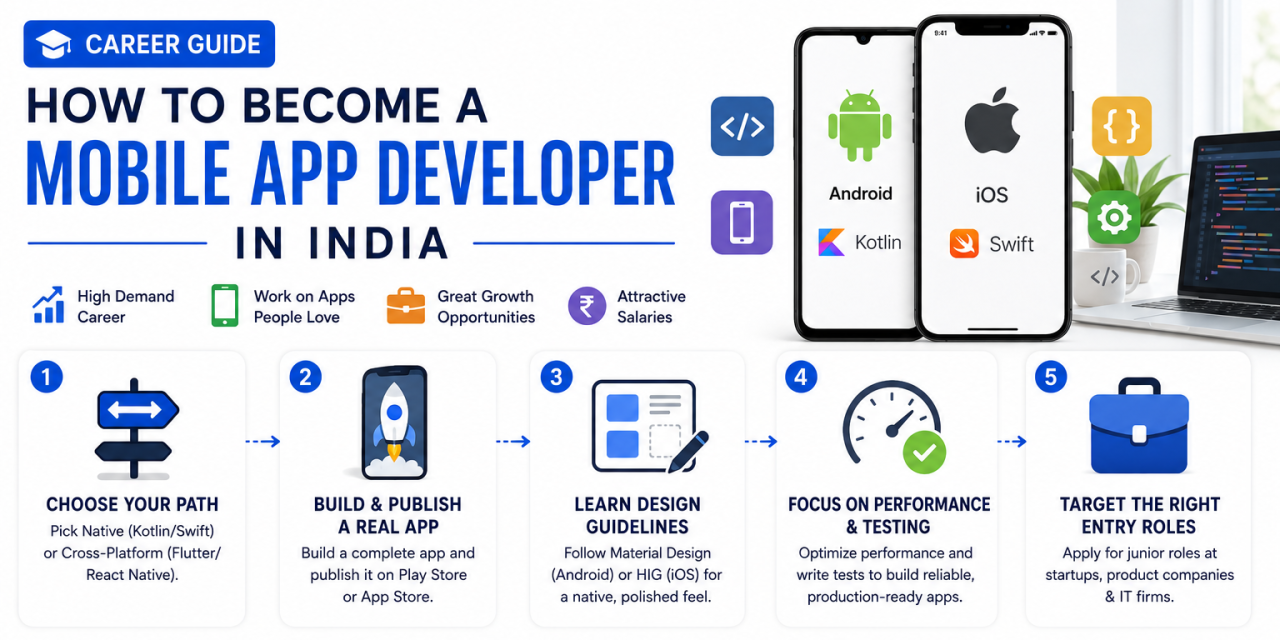
Deciding early whether to specialize in native Android development with Kotlin, native iOS with Swift, or a cross-platform framework like Flutter or React Native shapes the rest of the learning path, and each has genuinely different job market demand worth researching directly.
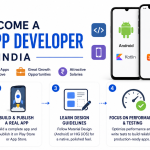
Build and Publish a Real App
Building a complete, functioning app and actually publishing it to the Play Store or App Store, even a simple one, demonstrates genuine end-to-end capability, from development through the actual submission and review process, that a portfolio of unpublished practice projects doesn’t fully prove.
Learn Platform-Specific Design Guidelines
Understanding Android’s Material Design or Apple’s Human Interface Guidelines and genuinely applying them separates an app that merely functions from one that feels native and polished on its intended platform, a distinction hiring managers specifically look for.
Get Comfortable with App Performance and Testing
Learning to profile an app for performance issues and write basic automated tests demonstrates a level of production-readiness that goes meaningfully beyond just getting features to technically work on a developer’s own test device.
Target the Right Entry Roles
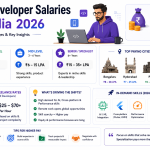
Junior Android developer, junior iOS developer, and mobile app developer roles at Indian startups, product companies, and IT services firms typically offer the most realistic entry points, often paying between four and eight lakhs annually to start, with experienced mobile developers at growing product companies earning considerably more as their published app portfolio and platform expertise deepen.
Choosing cross-platform frameworks like Flutter has become an increasingly popular path for Indian developers specifically because it offers a faster route to shipping both Android and iOS apps with a single codebase, though native development remains genuinely valuable for apps requiring the deepest platform-specific performance or the latest platform features immediately upon release. It’s worth being realistic that entry-level mobile developer roles involve significant bug fixing and feature maintenance on existing apps rather than building new apps from scratch, and that this maintenance work genuinely builds the practical debugging judgment senior mobile developers rely on later. Free resources like Google’s official Android developer training and Apple’s own Swift documentation offer genuinely structured, project-based learning that builds real portfolio pieces alongside the underlying technical concepts.
Mobile app development in India rewards demonstrated shipped-app experience and platform-specific polish over formal academic credentials more clearly than many tech careers, genuinely favoring motivated self-taught developers. Choose a platform path early, build and actually publish a real app, and target junior mobile developer roles rather than waiting for a senior opening to appear before gaining that crucial first published-app experience.