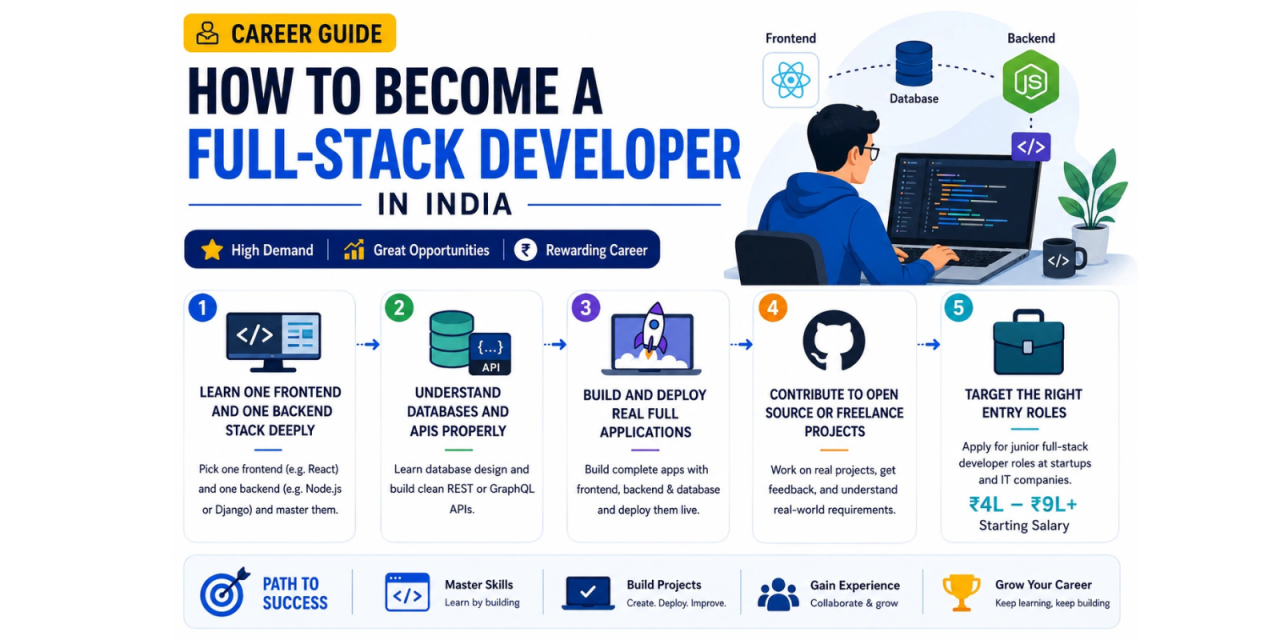
Full-stack development remains one of the most consistently in-demand technical roles in India’s startup and IT services ecosystem, since a developer comfortable working across both the frontend interface and backend logic of an application offers genuine flexibility that smaller teams especially value. The role rewards demonstrated project-building skill through a real portfolio far more than a specific engineering degree, which has kept the field genuinely accessible to self-taught developers and bootcamp graduates alongside traditional computer science graduates. With Indian startups and product companies continuing to build consumer and business applications for both domestic and global markets, demand for genuinely capable full-stack developers has remained strong even as the broader tech hiring market has fluctuated. Here’s a realistic path into the field for someone starting from outside it. Unlike some specialized tech roles, full-stack skills also translate directly into freelance and contract work, giving candidates a genuine income path even before landing a full-time position.
Learn One Frontend and One Backend Stack Deeply
Rather than superficially sampling many frameworks, picking one frontend framework like React and one backend stack like Node.js or Django and genuinely mastering the combination tends to produce a more hireable candidate than shallow familiarity across many different technologies.
Understand Databases and APIs Properly
Genuine comfort with designing a database schema and building a clean REST or GraphQL API separates a full-stack developer who can build a genuinely working application from one who can only follow along with an existing, pre-built codebase.
Build and Deploy Real Full Applications
Building a complete application with a working frontend, backend, and database, then actually deploying it live rather than leaving it running only on a local machine, demonstrates genuine end-to-end capability that a portfolio of isolated coding exercises simply doesn’t prove.
Contribute to Open Source or Freelance Projects
Contributing to a genuine open source project or taking on small freelance web development work exposes a developer to real production code, code review feedback, and actual client requirements in ways personal practice projects alone rarely replicate.
Target the Right Entry Roles
Junior full-stack developer and software engineer roles at Indian startups, product companies, and IT services firms typically offer the most realistic entry points, often paying between four and nine lakhs annually to start, with experienced full-stack developers at growing product companies earning considerably more as their shipped project portfolio deepens.
Building genuinely complete, deployed projects tends to matter more in Indian technical interviews than a long list of familiar-sounding technologies, since interviewers increasingly ask candidates to walk through a real project’s actual architecture and decisions rather than just naming frameworks used. It’s worth being realistic that the first year in a junior full-stack role often involves maintaining and extending existing code rather than building new features from scratch, and that this maintenance work genuinely builds the practical judgment senior developers rely on later. Free resources like the Odin Project and freeCodeCamp offer genuinely structured, project-based learning paths that build real portfolio pieces alongside the underlying technical concepts, making them worth prioritizing over passive video courses that don’t require actually building anything.
Full-stack development in India rewards demonstrated project-building skill and genuine end-to-end understanding over formal academic credentials more clearly than many tech careers, genuinely favoring motivated self-taught developers. Master one frontend and backend stack combination deeply, build and deploy real complete applications, and target junior full-stack roles rather than waiting for a senior opening to appear before gaining that first real-world experience. The developers who progress fastest tend to be the ones who kept shipping small, genuinely complete projects rather than endlessly perfecting a single unfinished one.