Ad-based monetization is often the default choice for new Indian developers simply because it requires the least upfront work, drop in an SDK and start earning small amounts per impression. But ad revenue is also notoriously unreliable, heavily dependent on user volume, and increasingly resented by users who’ve grown tired of intrusive, poorly placed ads cluttering every free app they download. There are genuinely viable alternatives that can earn more per user while creating a better product experience, and more Indian developers are shifting toward them as the app market matures. Here’s a practical look at how to monetize an app without leaning on ads at all.
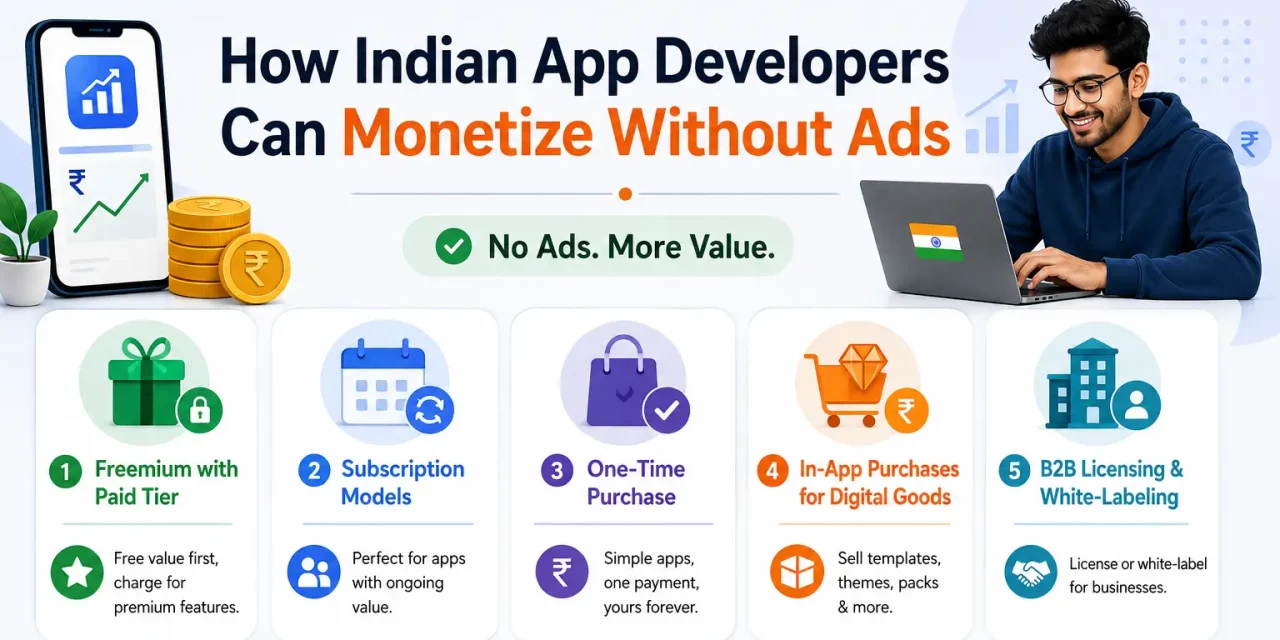
Freemium with a Genuine Paid Tier
The freemium model works best when the free tier is genuinely useful on its own rather than deliberately crippled to force an upgrade, which tends to backfire through poor reviews and low conversion. A well-designed freemium app earns trust with its free experience first, then offers a paid tier that removes real limitations rather than artificial ones.
Subscription Models for Ongoing Value
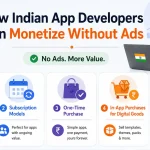
Subscriptions make the most sense for apps that deliver continuous value over time, like fitness coaching, content libraries, or productivity tools that genuinely improve the more consistently someone uses them. Indian users have grown considerably more comfortable with subscriptions in recent years, particularly when pricing is adjusted sensibly for local purchasing power rather than copied directly from US pricing.
One-Time Purchase for Utility Apps
For simple utility apps solving a single clear problem, a one-time purchase can outperform both ads and subscriptions, since users increasingly prefer paying once over an ongoing commitment for tools they’ll use occasionally rather than daily.
In-App Purchases for Digital Goods
Apps with a natural digital goods angle, templates, themes, premium content packs, can monetize through one-off purchases without needing a subscription or intrusive ad placement, giving users control over exactly what they’re paying for.
B2B Licensing and White-Labeling
For developers building tools with genuine utility for businesses, licensing the app to companies or offering a white-labeled version can generate far more per customer than consumer ads ever would, though it requires a different sales approach entirely from a typical consumer app launch.
Why This Shift Matters for Indian Developers Specifically
India’s app market has historically been more ad-tolerant and price-sensitive than markets like the US or parts of Europe, which pushed many early Indian apps toward ad-heavy monetization almost by default. That’s shifting as UPI-based micro-payments have made small in-app purchases genuinely frictionless compared to years ago, and as Indian users increasingly show willingness to pay small amounts for a clearly better, ad-free experience. Developers who move early toward these alternative models often find less competition in that specific monetization lane than the crowded, ad-saturated corner of the market, giving them a real advantage in both revenue per user and long-term brand trust that compounds the longer they stick with it.
Moving away from pure ad monetization isn’t just a philosophical choice, it’s increasingly a smarter business decision as Indian users become more willing to pay for genuinely good products. The right model depends entirely on what your app actually does, a daily-use tool suits subscriptions, while a simple utility often does better with a one-time price, but in nearly every case, a well-chosen non-ad model tends to build a healthier, more sustainable business than ad impressions alone ever could.