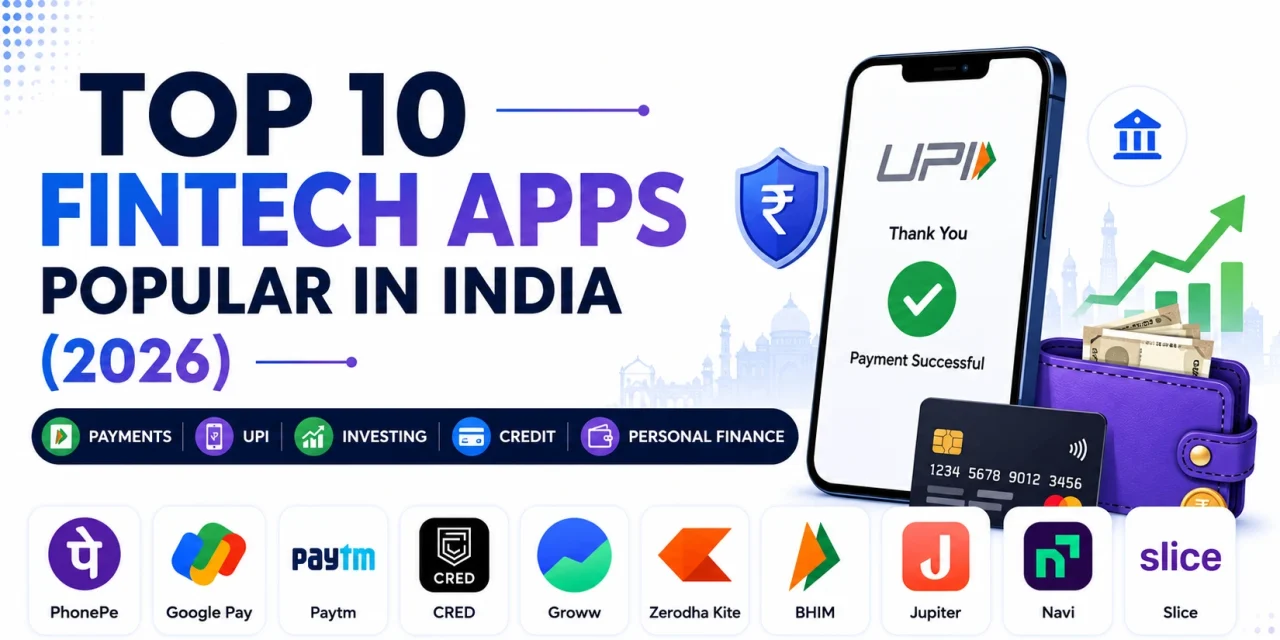
India’s fintech ecosystem has grown into one of the most active and innovative in the world, driven largely by UPI’s rapid adoption and a genuinely competitive market of apps fighting for the same user’s daily transactions. What started almost entirely with simple payments has expanded into investing, credit, insurance, and comprehensive personal finance management, all increasingly bundled into the same handful of dominant apps. Here are ten fintech apps that have earned genuine daily usage among Indian users in 2026, spanning payments, investing, and broader money management.
PhonePe
PhonePe remains one of the most widely used UPI apps in India, handling everything from peer-to-peer payments to bill splitting and merchant transactions, with strong penetration across both metro and smaller towns.
Google Pay’s clean interface and deep integration with the broader Google ecosystem have made it a default choice for many Indian users, particularly for quick person-to-person UPI transfers.
Paytm helped pioneer India’s digital payments shift and remains a broad financial super app today, covering payments, bill recharges, and increasingly, financial products like insurance and lending.
CRED
CRED built its reputation on rewarding users for paying credit card bills on time, layering a design-forward experience and expanding fintech features on top of what started as a fairly simple bill payment tool.
Groww
Groww simplified mutual fund and stock investing for a generation of first-time Indian retail investors, with an interface deliberately built to feel approachable rather than intimidating for beginners.
Zerodha Kite
Kite remains the trading platform of choice for more serious retail investors and traders, backed by Zerodha’s reputation as one of India’s largest discount brokers by user base.
BHIM
BHIM, developed by the National Payments Corporation of India, remains a genuinely simple, no-frills option for straightforward UPI payments without any of the additional shopping or rewards features layered into private apps.
Jupiter positions itself as a neobank offering a full digital banking experience with built-in budgeting and spend tracking, appealing to younger users who want more visibility into spending habits than a traditional bank app provides.
Navi
Navi has expanded from personal loans into a broader suite of financial products including mutual funds and insurance, aiming to become a genuine one-stop app for everyday personal finance needs.
Slice
Slice built a loyal younger user base around its credit card and UPI offering, focusing heavily on rewards and a design-forward experience aimed specifically at first-time credit users entering the formal credit system.
What’s Driving This Level of Fintech Adoption
UPI’s interoperability, letting any app talk to any bank account instantly, has been the single biggest driver of India’s fintech boom, removing the friction that historically kept digital payments confined to a small number of tech-comfortable users. That infrastructure gave newer entrants like Groww and Jupiter a genuinely fair playing field to compete against payment-first incumbents like Paytm and PhonePe by building specifically better experiences for investing or budgeting rather than trying to out-compete on payments alone. For app developers watching this space, the lesson is fairly clear, India’s fintech users increasingly reward apps that do one specific job exceptionally well over broad super-apps trying to cover everything at a mediocre level.
India’s fintech landscape shows no signs of consolidating around just one or two apps anytime soon, with genuine specialization continuing to carve out distinct spaces for payments, investing, and credit rather than a single winner-take-all outcome. Most Indian users end up with three or four of these apps installed simultaneously, each covering a different specific need, which says a lot about how genuinely competitive and specialized this market has become over the past several years.