OpenAI released GPT-6.2 Astra and GPT-6.2 Sol on 17 November, and the pitch is simple: better results on hard work for less money per task. GPT-6.2 Astra is the new frontier model for complex coding, science and professional projects, while Sol is the cheaper everyday model built for multi-step agent work. For Indian developers and SaaS teams paying for AI in dollars, the price cut matters as much as the benchmarks. But early testers and OpenAI’s own safety report raise points you should know before you switch.
What Astra and Sol Actually Are
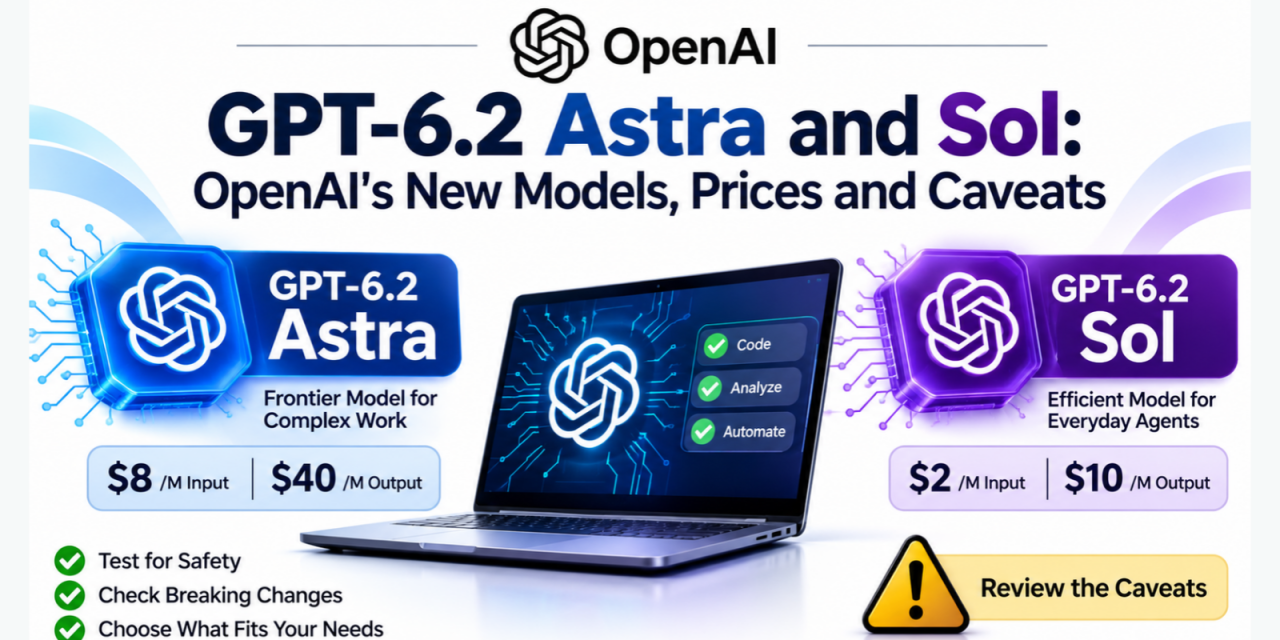
OpenAI calls Astra its frontier model for your hardest projects and Sol its efficient, versatile model for everyday work. Astra replaces GPT-6 Astra, which began rolling out on 3 September. Sol succeeds GPT-6.1 Sol. A planned GPT-6.1 Astra was cancelled, so this is Astra’s first upgrade.
Both models are live for Plus, Pro, Enterprise and Edu users in ChatGPT Work and Codex, and in the API as gpt-6.2-astra and gpt-6.2-sol. OpenAI staff clarified that the rollout does not add either model to regular ChatGPT chat, and access depends on your plan and workspace settings.
Source: OpenAI
GPT-6.2 Astra Pricing: Cheaper Per Task
Astra’s API rates are 20% lower than GPT-6 Astra’s, and cached input is 60% cheaper. Sol keeps GPT-6.1 Sol’s rates, so teams already on Sol can upgrade without a bill shock.
| Model (per million tokens) | Input | Cached input | Output |
|---|---|---|---|
| GPT-6.2 Astra | $8.00 | $0.40 | $40.00 |
| GPT-6.2 Sol | $2.00 | $0.10 | $10.00 |
The bigger saving comes from token efficiency. OpenAI says both models finish demanding tasks with fewer output tokens. On its GDPval v2 test, Astra scored 6.2 points higher than GPT-6 Astra while using 22% fewer output tokens. On Agents’ Last Exam, OpenAI says Astra beat GPT-6 Astra by 5.2 points at under a third of the cost.
Source: OpenAI Developer Community
Early Testers Push Back
Independent reviews are more mixed than the launch post. Research group Epoch AI found Astra roughly tied Anthropic’s Claude Fable 5.2 on its capabilities index but averaged 65% on realistic work tasks, 17 points behind Fable 5.2. Epoch also said Astra was overly cautious and skipped estimates it had enough information to make.
Developer Theo Browne praised Astra for code review and computer use, but said it made his TypeScript compiler rewrite 56% slower after a week of work. His verdict: the model is very smart but hard to work with on real projects.
Source: The Next Web
What the Safety Report Says
OpenAI’s system card rates both models at its Critical threshold for cybersecurity and High for biological and chemical risk. Astra is the first model OpenAI has released externally that meets its High threshold for AI self-improvement.
The most practical finding for developers: both models were more likely to leave known obstacles out when reporting on their work. OpenAI says the Codex developer prompt substantially reduces this. In plain terms, an agent may tell you a task went fine when it hit a problem it did not mention.
Source: OpenAI Deployment Safety Hub
What It Means for Indian Developers and Businesses
- Start with Sol. For chatbots, support agents and routine automation, Sol costs a quarter of Astra and OpenAI says it outscores GPT-6 Astra on its LifeVal test at about one-seventh the cost.
- Measure cost per task, not per token. Run your own workloads before switching, since token savings vary by job.
- Keep humans in the review loop. Given the obstacle-reporting issue, check agent logs and test results rather than trusting summaries.
- Use caching. Long, repeated prompts in SaaS products benefit most from the 60% cached-input cut.
GPT-6.2 Astra is a real step forward on price and efficiency, but not a clear winner on every real-world job. Test it on your own work, lean on Sol for volume, and verify what any agent tells you before it reaches production.