Site reliability engineering has grown into a genuinely distinct specialization within India’s tech industry, related to but meaningfully different from general DevOps work, focused specifically on keeping production systems reliably available and quickly diagnosing issues when something genuinely does go wrong at scale. The field rewards demonstrated skill in monitoring, incident response, and systems thinking through real operational experience more than a specific degree, keeping the path accessible to engineers transitioning from backend development or DevOps roles willing to build the specific reliability-focused skill set. Here’s a realistic path into site reliability engineering for someone starting from an adjacent technical background. Genuine calm under pressure also matters here, since a production outage affecting real customers requires clear thinking rather than panic, a temperament worth honestly assessing before pursuing this specific specialization.
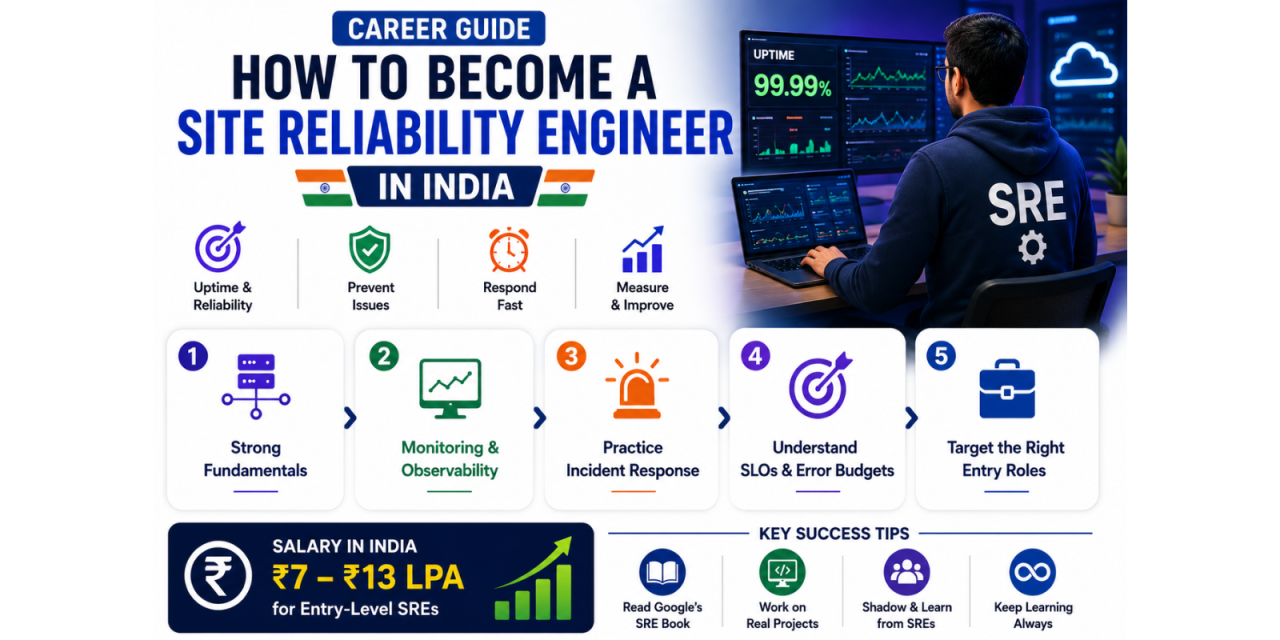
Build Strong Systems and Networking Fundamentals
Genuine deep understanding of how distributed systems, networking, and databases actually behave under load forms the practical foundation SRE work builds on, since diagnosing a genuine production incident requires reasoning about systems rather than following a fixed troubleshooting checklist.
Learn Monitoring and Observability Tools
Real hands-on comfort with monitoring and observability platforms like Prometheus, Grafana, or Datadog, genuinely setting up alerts and dashboards rather than only viewing existing ones, demonstrates practical capability employers specifically look for.
Practice Incident Response
Participating in genuine incident response, even in a personal project or open source context, simulating an outage and practicing calm, structured diagnosis under pressure, builds real practical skill that theoretical study alone doesn’t develop.
Understand Service Level Objectives
Genuine familiarity with defining and tracking service level objectives and error budgets, the practical framework SRE teams use to balance reliability against the pace of shipping new features, represents a core conceptual skill specific to this role.
Target the Right Entry Roles
Site reliability engineer, junior SRE, and production engineer roles at Indian product companies and larger startups typically offer the most realistic entry points, often paying between seven and thirteen lakhs annually to start, with experienced SREs at larger companies earning considerably more given the specialized, high-stakes nature of the role.
Transitioning from a backend development or DevOps role into SRE specifically often works best by taking on genuine on-call or incident response responsibilities within an existing role first, building the specific reliability-focused experience before formally pursuing a dedicated SRE position. It’s worth being realistic that SRE work involves genuinely significant on-call responsibility and pressure during actual incidents, a real tradeoff against the specialized pay and technical depth the role offers. Free resources like Google’s own published SRE book and various open source observability tool documentation offer genuinely practical, well-regarded starting points for building foundational SRE knowledge. Shadowing an experienced SRE during an actual on-call rotation, even informally, also provides genuinely valuable exposure to how real incidents actually unfold under pressure.
Site reliability engineering in India rewards demonstrated systems thinking and genuine incident response skill over formal credentials more clearly than many tech careers, favoring motivated engineers transitioning from adjacent backend or DevOps roles. Build systems fundamentals and monitoring skill first, gain real incident response experience, and target SRE or production engineer roles rather than waiting for a senior opening to appear before gaining that crucial first reliability-focused experience. The engineers who thrive longest in this role tend to be the ones who genuinely find a resolved incident satisfying rather than simply stressful, treating each one as a real learning opportunity.