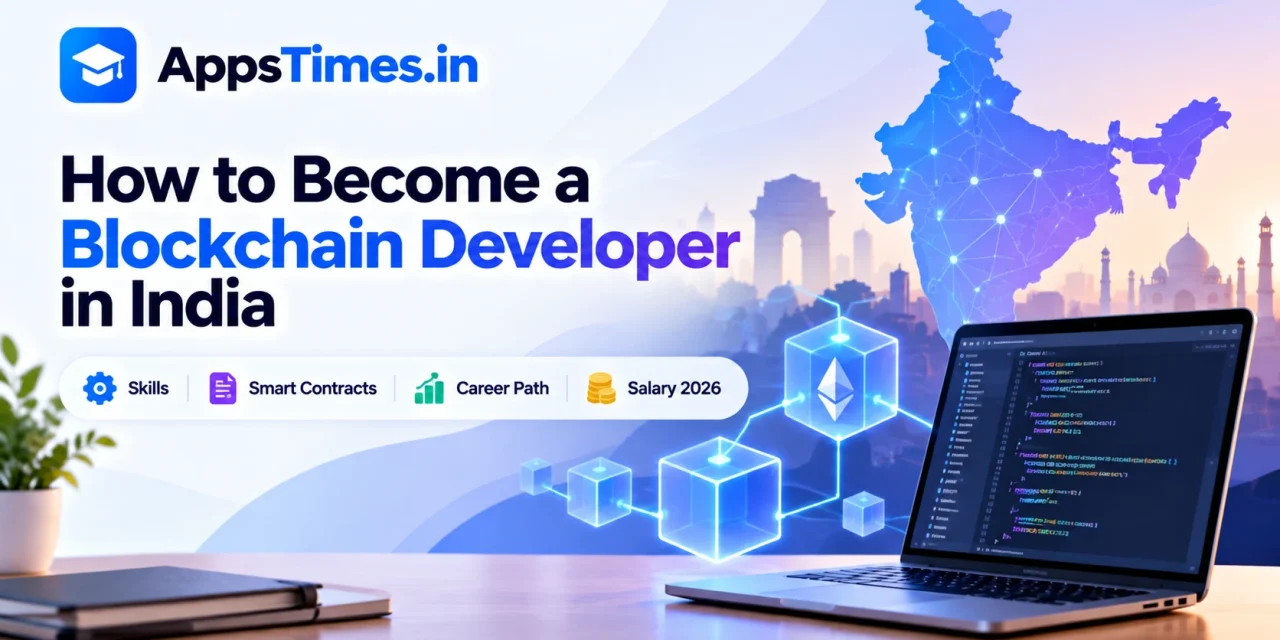
Blockchain developer has remained a genuinely distinct, if smaller and more specialized, career path within India’s technology industry, requiring a meaningfully different skill set than mainstream web or mobile development given the unique constraints of writing code that runs immutably on a public, decentralized network. The role covers everything from writing smart contracts that manage genuine financial value to building the decentralized applications, commonly called dApps, that let ordinary users interact with blockchain systems through a familiar web interface. This guide breaks down what the role actually involves and how to build a credible path into it from India’s current technology landscape in 2026.
What a Blockchain Developer Actually Does
A blockchain developer writes and deploys smart contracts, self-executing code that runs on a blockchain and often manages genuine financial value, meaning bugs in this code can result in real, sometimes catastrophic and irreversible financial losses rather than merely an inconvenient application error. This work demands a genuinely different mindset than typical software development, since a deployed smart contract often can’t simply be patched the way a traditional web application can, making thorough testing and security auditing before deployment considerably more critical than in most other engineering disciplines. Day-to-day work often involves writing and testing smart contract code, building the front-end interfaces that let users interact with those contracts, and staying current with a specific blockchain ecosystem’s evolving standards and tooling.
Core Skills Needed
Deep, genuine fluency in Solidity remains the most in-demand core skill for Ethereum and Ethereum-compatible blockchain development, the dominant ecosystem for smart contracts, alongside growing demand for Rust specifically for Solana-based development. A rigorous, security-first mindset matters enormously in this field specifically, since smart contract vulnerabilities have led to genuinely massive, well-publicized financial losses across the industry, making a working knowledge of common smart contract security patterns and known vulnerability classes considerably more important than in typical web development. Comfort with blockchain-specific development tools and testing frameworks, alongside a genuine understanding of gas optimization, minimizing the transaction cost users pay to interact with a contract, rounds out the practical technical foundation this specialization demands.
Certifications and Learning Path
This field remains young enough that formal certifications carry meaningfully less weight than a genuine, demonstrable portfolio of deployed smart contracts and open-source contributions, since blockchain development is fundamentally a hands-on, verifiable discipline where a project’s actual deployed code can be directly inspected. That said, structured certification programs from established blockchain education providers do carry some genuine credibility, particularly for candidates without an existing portfolio to point to. The most effective path into this specialization tends to combine deliberate study of smart contract security patterns with genuine hands-on project building, even a modest personal dApp deployed to a testnet, since this field rewards demonstrated, auditable competency considerably more than certifications or theoretical knowledge alone.
Typical Career Path and Salary Expectations
Entry-level blockchain developer roles in India’s major tech hubs currently see salaries ranging from roughly 8 to 18 lakhs per annum for candidates with genuine Solidity fluency and a demonstrable project portfolio, reflecting the field’s continued relative scarcity of qualified talent compared to more mainstream development specializations. Mid-level blockchain developers holding three to six years of experience typically command 20 to 40 lakhs depending on the complexity and financial stakes of the projects they work on, and senior blockchain engineers or smart contract security auditors at established Web3 companies or dedicated audit firms can reach 50 lakhs and well beyond. This field’s compensation has remained genuinely volatile alongside the broader cryptocurrency and Web3 market’s own cycles, meaning candidates should go in with realistic expectations about hiring demand fluctuating considerably more than in more established technology specializations.
For developers currently working in general web development who want to transition into blockchain specifically, the most effective path tends to combine deliberate, hands-on smart contract building with genuine study of common security vulnerabilities, since this field rewards demonstrated, security-conscious competency far more than general programming skill alone. Building and deploying even a modest personal smart contract project to a public testnet, and being able to walk through its security considerations in detail during an interview, builds exactly the kind of practical, auditable credibility that separates a genuinely credible blockchain developer candidate from someone with only theoretical exposure to the concepts. Contributing to established open-source blockchain protocols or auditing tools can also meaningfully strengthen a candidate’s portfolio in a field where verifiable, inspectable work matters more than almost any credential.
Conclusion
Blockchain development remains a genuinely specialized and distinctly higher-stakes career path within India’s technology sector, rewarding developers who build real depth in both smart contract programming and the security discipline this domain specifically demands. For web developers willing to build genuine expertise in Solidity or Rust alongside a security-first mindset, 2026 remains a viable year to pursue this path, though candidates should enter with clear-eyed awareness that hiring demand in this specialization tends to track the broader Web3 market’s own genuine volatility more closely than most other technology careers.