Freelance development has become a genuinely viable, full-time career path for Indian developers, offering both global client access through remote-friendly platforms and the flexibility to build a business around specific technical specializations rather than being limited to whatever roles are available locally at a single company. The path rewards a demonstrated portfolio and genuine client communication skill more than any specific credential, making it accessible to self-taught developers willing to handle both the technical work and the very real business side, proposals, pricing, and client management, that a traditional employment role otherwise handles on a developer’s behalf. Here’s a realistic path into freelance development for someone starting from a technical background but new to freelancing specifically. Comfort with uncertainty and inconsistent monthly income matters just as much here as any specific coding skill, especially in the early stages of building a client base.
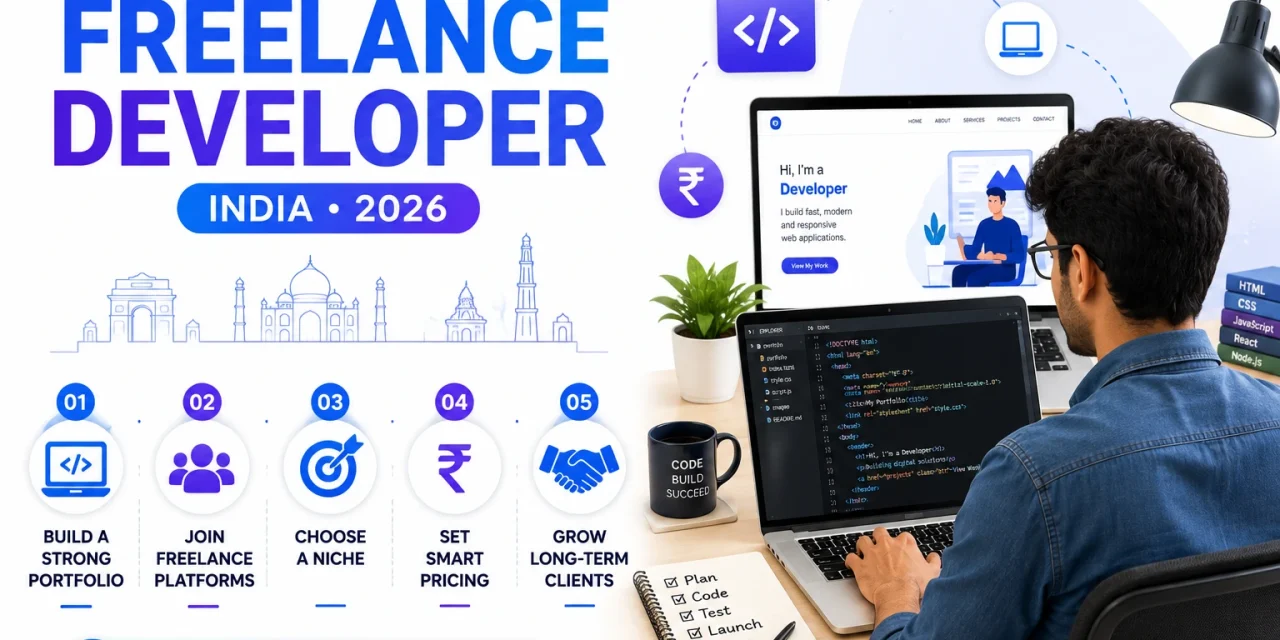
Build a Portfolio Before Seeking Clients
Having two or three genuinely polished, deployed projects ready to show before ever approaching a client matters enormously, since freelance clients evaluate visible proof of capability far more than a resume alone, which carries less weight in freelance hiring than in traditional employment.
Start on Established Freelance Platforms
Platforms like Upwork, Fiverr, and Toptal remain the most accessible way to find initial paying clients while building a reputation and review history, even though platform fees and early competitive pricing pressure make the first several months genuinely challenging financially.
Price Based on Value, Not Just Hours
Learning to price a project based on the value it delivers to a client, rather than purely an hourly rate, tends to increase earnings meaningfully once a freelancer has enough experience and portfolio strength to make that pricing conversation credible with clients.
Specialize Rather Than Staying a Generalist
Freelancers who develop a genuine specialization, a specific framework, industry, or type of application, tend to command higher rates and attract more qualified leads than generalists competing purely on price against a much larger pool of similar freelancers.
Build Direct Client Relationships Over Time
Transitioning some clients away from a platform’s marketplace toward direct, ongoing relationships reduces platform fees and often leads to more stable, recurring income than constantly pitching for new one-off projects through a marketplace alone.
Realistic early income expectations matter for anyone considering this path, since the first six months to a year on freelance platforms typically involve lower rates and inconsistent income while building reviews and reputation, a genuinely different financial pattern than a predictable monthly salary from traditional employment. It’s worth maintaining some financial buffer or part-time income during this early period rather than depending entirely on freelance income from day one. Joining Indian freelancer communities, both online and through local meetups, provides genuinely valuable practical advice on pricing, client management, and handling international payments that platform documentation alone doesn’t fully cover. Understanding international payment and tax considerations specific to freelance income in India is also worth researching early, since it differs meaningfully from standard salaried employment tax handling.
Freelance development in India rewards a genuine portfolio and client communication skill over formal credentials more clearly than traditional employment, but it also demands comfort with the business side of the work that a regular job typically handles for you. Build a strong portfolio first, start on established platforms to build reputation, and gradually specialize and shift toward direct client relationships rather than expecting platform marketplace work alone to remain the long-term income model.