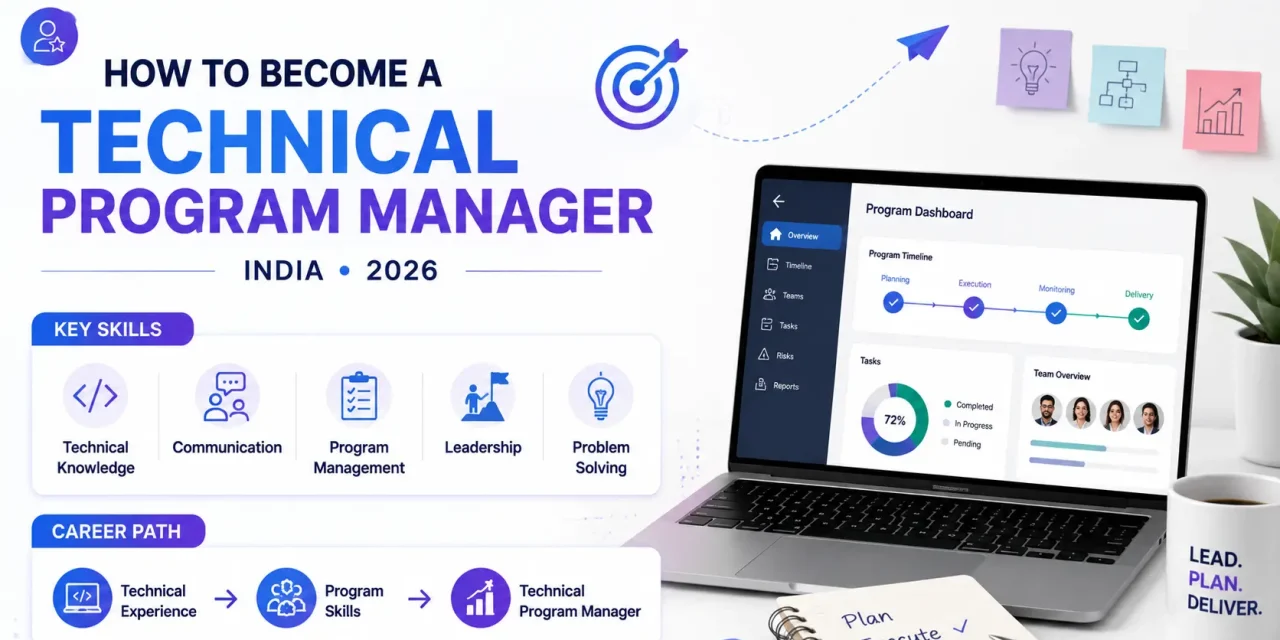
Technical program management has grown into a genuinely distinct and well-compensated career path in India’s larger tech companies, sitting at the intersection of engineering understanding and cross-functional coordination to keep genuinely complex, multi-team technical projects moving forward on schedule. Unlike many entry-level tech roles, technical program management is typically a transition role rather than a first job, drawing candidates from engineering, project management, or product backgrounds who’ve already built real technical credibility before moving into this specifically coordination-focused position. Here’s a realistic path into technical program management for someone considering the transition. Genuine comfort operating in ambiguity also matters here, since a TPM often needs to bring clarity and structure to a project before all the details are fully known upfront, unlike a purely execution-focused engineering role.
Build Genuine Technical Credibility First
Technical program managers need enough real engineering background to understand technical tradeoffs and communicate credibly with engineering teams, making prior hands-on technical experience, as a developer, QA engineer, or similar role, a genuinely important foundation before transitioning.
Develop Strong Cross-Functional Communication Skills
The role fundamentally requires translating between engineering, product, and business stakeholders clearly, and genuine skill at synthesizing complex technical information into accessible updates for non-technical audiences separates effective TPMs from purely technical managers.
Learn Program Management Frameworks
Familiarity with frameworks like Agile, Scrum, and structured risk management, alongside genuine hands-on experience with program tracking tools like Jira or Linear, provides the practical toolkit most technical program management roles expect candidates to already have.
Build a Track Record of Coordinating Complex Projects
Demonstrating genuine experience successfully coordinating a project involving multiple teams or stakeholders, even informally within a current engineering or product role, provides concrete proof of the cross-functional coordination skill the TPM role specifically requires.
Target the Right Transition Roles
Technical program manager and senior technical project manager roles at Indian product companies, larger startups, and multinational tech companies typically offer the most realistic entry points for this transition, often paying between twelve and twenty lakhs annually depending on prior experience, with senior TPMs at larger companies earning considerably more as their track record managing genuinely complex, high-stakes programs grows.
Making the transition from a purely technical role like software engineering into technical program management often works best gradually, taking on informal coordination responsibilities within an existing engineering role before formally pursuing a dedicated TPM position. It’s worth being realistic that the TPM role involves genuinely significant time in meetings and stakeholder communication rather than hands-on technical work, a real shift that some candidates find they miss after transitioning from a purely engineering-focused role. Free resources like Google’s own published program management frameworks and various case studies from larger tech companies offer genuinely useful practical insight into how the role actually operates day to day at scale.
Technical program management in India rewards genuine technical credibility combined with strong cross-functional communication skill, typically built through a deliberate transition rather than entered directly as a first job. Build real technical experience first, develop genuine cross-functional coordination skills, and target TPM or senior technical project manager roles once you have concrete proof of successfully coordinating complex, multi-team projects. The strongest candidates for this transition tend to be the ones who were already quietly doing TPM-style coordination work informally within their existing role, long before the title itself ever appeared on their resume.