
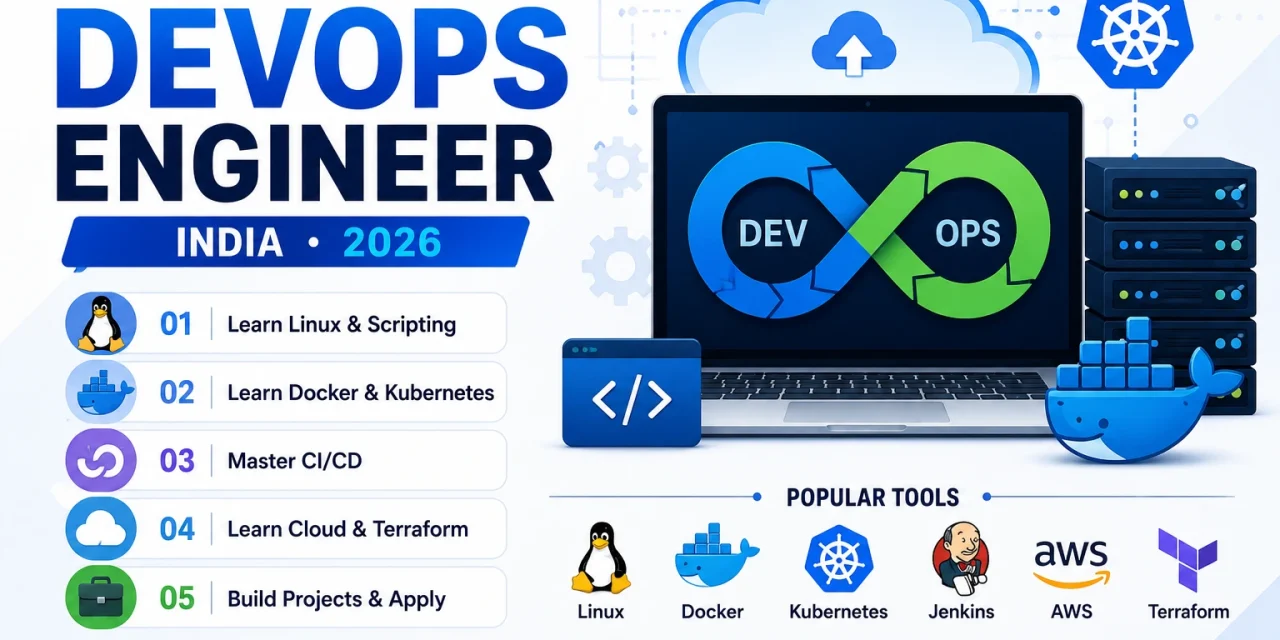
DevOps engineering has become one of the more consistently in-demand technical roles in India, sitting at the intersection of development and operations to automate how software actually gets built, tested, and deployed reliably at scale. The field genuinely rewards hands-on skill with automation tools and cloud infrastructure over a specific engineering degree, keeping the path accessible to system administrators, developers, and QA engineers transitioning from adjacent roles willing to learn the specific automation-focused skill set DevOps demands. With Indian companies across every industry increasingly automating their deployment pipelines rather than relying on manual release processes, demand for genuinely capable DevOps engineers has remained strong. Here’s a realistic path into the field for someone starting from an adjacent technical background. Genuine comfort with ambiguity and troubleshooting under pressure also matters here, since production incidents rarely happen at a convenient time.
Build Strong Linux and Scripting Fundamentals
Genuine comfort with Linux command-line administration and scripting in Bash or Python forms the practical foundation nearly every DevOps role builds on, since most automation tools and deployment pipelines ultimately run on Linux-based infrastructure.
Learn Containerization with Docker and Kubernetes
Docker and Kubernetes have become genuinely standard tools for packaging and orchestrating applications at scale, and real hands-on comfort with both, not just conceptual familiarity, remains one of the most consistently requested skills in Indian DevOps job postings.
Master CI/CD Pipeline Tools
Building genuine hands-on experience with CI/CD tools like Jenkins, GitLab CI, or GitHub Actions, actually configuring an automated pipeline rather than only reading about the concept, demonstrates practical capability that theory alone doesn’t prove to a hiring manager.
Get Comfortable with Infrastructure as Code
Tools like Terraform or Ansible that let infrastructure be defined and provisioned through code rather than manual configuration represent a genuinely core DevOps skill, and building a personal project that provisions real cloud infrastructure demonstrates practical capability effectively.
Target the Right Entry Roles
DevOps engineer, site reliability engineer, and infrastructure engineer roles at Indian startups, product companies, and IT services firms typically offer the most realistic entry points, often paying between five and nine lakhs annually to start, with experienced DevOps engineers and SREs at larger companies earning considerably more as their automation and infrastructure expertise deepens.
Building a genuine personal project that provisions and deploys a real application through a complete automated pipeline, from code commit through deployment, demonstrates practical end-to-end capability far more convincingly than isolated familiarity with individual tools in separate practice exercises. It’s worth being realistic that entry-level DevOps roles involve significant time troubleshooting existing pipelines and infrastructure rather than designing new systems from scratch, and that troubleshooting experience genuinely builds the operational judgment senior DevOps engineers rely on later. Free resources like Kubernetes’ own official documentation and various cloud provider free tiers offer genuinely practical, hands-on ways to build real experience before investing in paid certification exams.
DevOps engineering in India rewards demonstrated hands-on automation and infrastructure skill over formal academic credentials more clearly than many tech careers, genuinely favoring motivated candidates from adjacent technical backgrounds. Build Linux and scripting fundamentals first, gain real hands-on experience with containerization and CI/CD tools, and target DevOps or infrastructure engineer roles rather than waiting for a senior opening to appear before gaining that crucial first real automation experience. The engineers who progress fastest tend to be the ones who genuinely enjoy fixing something broken under a bit of pressure rather than finding it stressful.