Game development combines programming, design, art, and storytelling, and India has become an important market and talent base, with a large mobile audience and a growing number of studios, outsourcing houses, and indie teams. Most people start by building small games with an engine, usually Unity or Unreal Engine, and grow from there. The industry changed in 2025 and 2026: India’s Promotion and Regulation of Online Gaming Act banned real-money online games, and its rules took effect on 1 May 2026, which reportedly led to layoffs and restructuring at companies built around such games, while casual, social, and esports titles remain legal. Prospective developers should therefore focus on skills that transfer, such as game programming, design, and live operations, and avoid depending on a single business model. Salary figures below are indicative and vary widely by studio and city.
What a Game Developer Actually Does
A game developer builds the systems players interact with, including movement, combat, user interfaces, progression, and online features. Programmers write gameplay and tools code, designers define rules and balance, artists and animators create visuals, and technical artists connect the two. In small studios, one person may cover several roles. Mobile games also depend on live operations, meaning updates, events, analytics, and monetization tuned to player behavior. Daily work involves prototyping, testing on real devices, fixing bugs, and iterating on feedback. Game development is deadline-driven, and crunch periods before launches are common, so working culture is worth asking about.
Core Skills and Tools
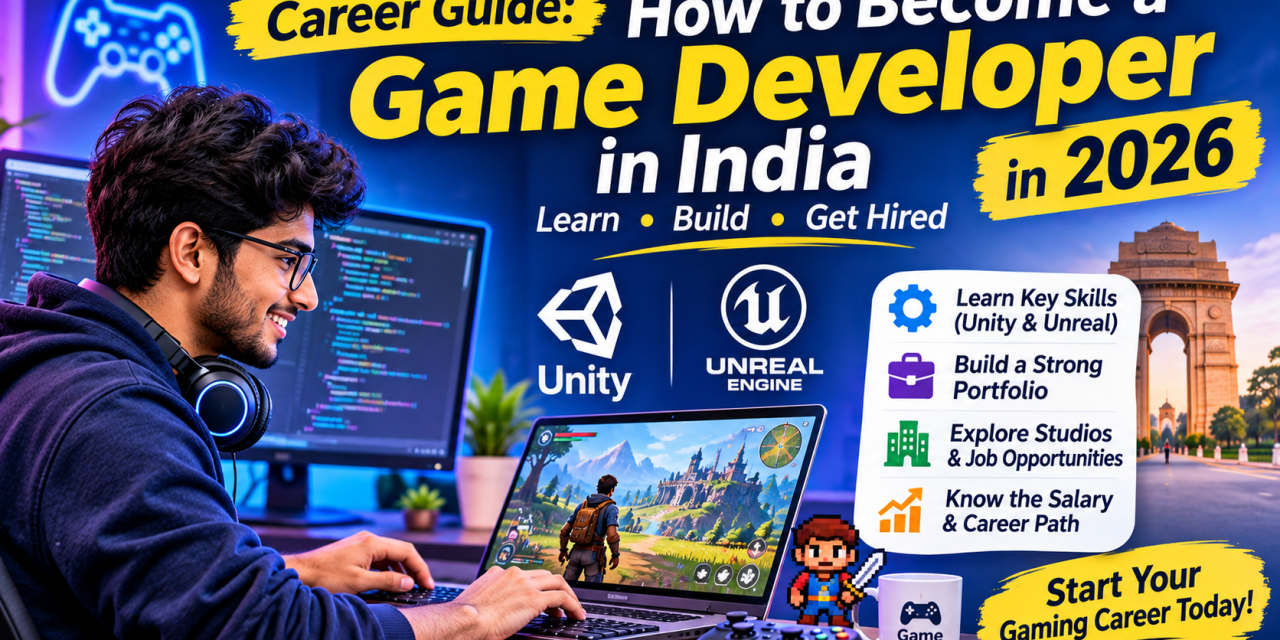
Most Indian game jobs use Unity with C#, particularly for mobile, while Unreal Engine with C++ and Blueprints is common for higher-end and console projects. Solid programming fundamentals, including data structures, math, and object-oriented design, matter more than any one engine. Vector math, physics, and basic linear algebra are used constantly. Useful extras include version control with Git, profiling and optimization for low-end phones, networking and multiplayer basics, and analytics tools. Designers need documentation and prototyping skills, and artists need tools such as Blender, Photoshop, and engine-specific pipelines. Teamwork and communication are important because games are built by cross-functional teams.
Portfolio, Certifications and Learning Path
In games, a portfolio matters more than a degree. The most effective path is to build and finish small games, publish them on itch.io or the Play Store, and show playable builds with short write-ups. Game jams, where teams build a game in a weekend, are a good way to practice finishing projects and to network. Unity offers its own learning platform and certifications, such as Unity Certified Associate and Professional, which can help candidates stand out, though employers care mainly about shipped work. Degrees and diplomas from game design programs exist in India and can help with industry contacts. Reading postmortems and studying games you love builds design judgment.
Career Path and Salary Expectations
Entry-level game developer or junior programmer roles in India commonly start in the range of roughly three to six lakhs per annum, with higher pay at larger studios and global publishers. Developers with three to six years of experience often earn around eight to twenty lakhs, and senior developers, technical leads, and lead designers can earn twenty-five lakhs or more at established companies. Career paths branch into gameplay programming, engine and tools work, technical art, game design, production, and live operations, and many developers also move into AR and VR, simulation, or enterprise 3D roles. Freelance and indie income exists but is unpredictable. These ranges are indicative only and vary widely.
For students and working developers interested in games, the most useful habit is shipping small projects regularly. Start with a simple clone of a classic game, then add your own twist, and finish it before starting another. Learn to profile and optimize for the low-end Android phones that most Indian players use, since performance is a common hiring filter. Follow industry news about regulation, because the legal landscape for online games has shifted, and prefer studios with diverse revenue. Join local communities and game jams to meet collaborators, and keep a public portfolio site. Be wary of paid courses that promise guaranteed jobs, and check the track record of any program before paying.
Conclusion
Game development is demanding and creative, and India’s mobile-first market offers real opportunities for developers who can ship polished games. Build a portfolio of finished projects, learn one engine well, stay adaptable as regulation and business models change, and keep playing and analyzing games, since good developers are first of all good players.