Analytics engineer has emerged as a genuinely distinct specialization sitting at the intersection of data engineering and data analysis, a role that didn’t really exist as a formal title until tools like dbt popularized the idea of applying real software engineering discipline, version control, testing, documentation, to the SQL transformations that turn raw data into genuinely usable business metrics. Unlike a data engineer who builds and maintains the pipelines moving raw data into a warehouse, or a data analyst who builds dashboards and answers business questions, an analytics engineer owns the crucial middle layer: transforming raw data into clean, well-documented, trustworthy datasets that analysts and business teams can actually rely on. This guide breaks down what the role actually involves and how to build a credible path into it from India’s current data landscape in 2026.
What an Analytics Engineer Actually Does
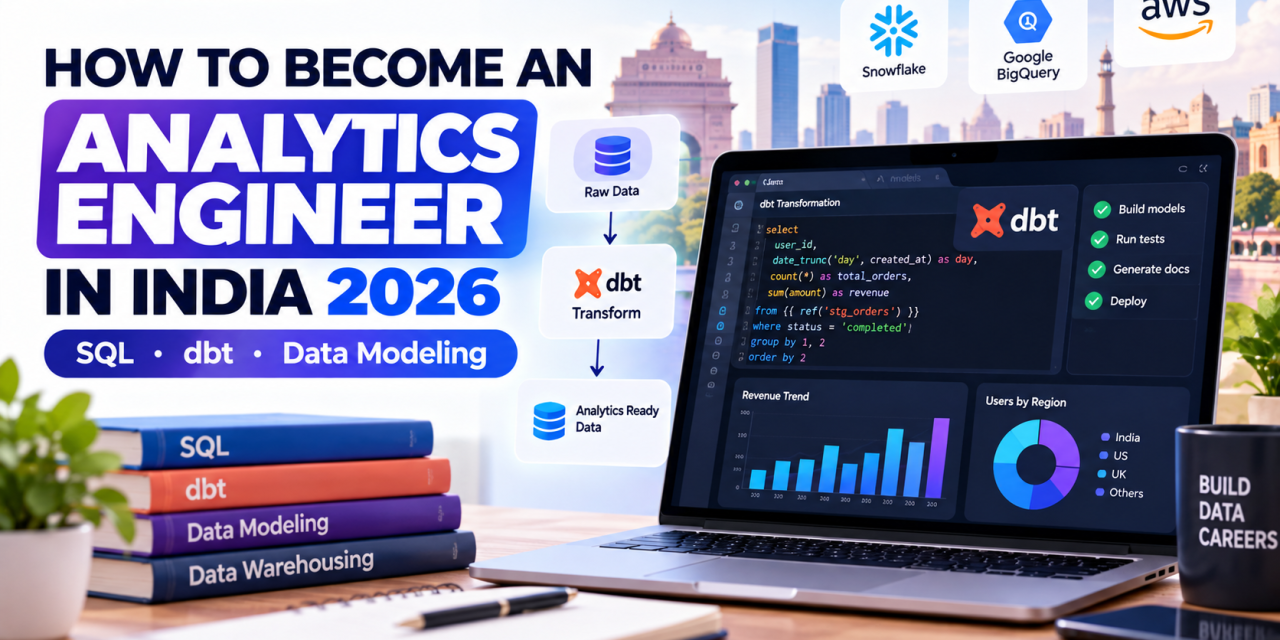
An analytics engineer builds and maintains the SQL-based transformation layer that sits between raw data landing in a warehouse and the clean, business-ready tables that analysts and dashboards actually query, most commonly using dbt to apply genuine software engineering practices, version control, automated testing, documentation, to what used to be ad-hoc, undocumented SQL scripts. This work involves close collaboration with both data engineers upstream, who handle getting raw data into the warehouse in the first place, and analysts or business stakeholders downstream who need genuinely trustworthy, well-defined metrics to build reports and dashboards on top of. Day-to-day work often involves writing and testing new data transformation models, documenting exactly what a specific business metric actually means and how it’s calculated, and troubleshooting data quality issues that surface when a transformation produces unexpected or inconsistent results.
Core Skills Needed
Deep, genuine SQL fluency forms the absolute core requirement for this role, since the vast majority of an analytics engineer’s daily work involves writing and refining SQL transformation logic rather than a general-purpose programming language. Hands-on expertise with dbt specifically has become close to a genuine industry standard for this role, since it’s the tool most directly responsible for popularizing the analytics engineering discipline itself, along with a solid understanding of dimensional data modeling concepts that determine how data gets structured for genuinely efficient, understandable analysis. A working understanding of data warehouse platforms, particularly Snowflake, BigQuery, or Redshift, alongside genuine data quality and testing discipline, rounds out the practical skill set that separates a credible analytics engineer from a data analyst who only occasionally writes SQL transformations without the surrounding engineering rigor.
Certifications and Learning Path
dbt Labs’ own certification program carries genuine, growing recognition specifically for this role, since it directly validates hands-on competency with the tool that has become synonymous with the analytics engineering discipline itself. Cloud data warehouse certifications from Snowflake, Google Cloud, or AWS add real complementary credibility, demonstrating platform-specific competency beyond pure SQL and dbt skills alone. The most effective path into this specialization tends to combine structured dbt learning with genuine hands-on practice building a real transformation project, even a personal project analyzing public data, since this field rewards demonstrated modeling discipline and documentation quality considerably more than theoretical SQL knowledge alone.
Typical Career Path and Salary Expectations
Entry-level analytics engineer roles in India’s major tech hubs currently see salaries ranging from roughly 8 to 15 lakhs per annum for candidates with strong SQL fundamentals and demonstrated dbt project experience, with mid-level analytics engineers holding three to six years of experience typically commanding 18 to 32 lakhs depending on company size and the complexity of the data models they maintain. Senior analytics engineers and analytics engineering leads at larger data-mature companies can reach 40 lakhs and well beyond, particularly with a track record of building genuinely reliable, well-documented data models that business teams across an organization actually trust. Many analytics engineers in India transition into the role from either a data analyst background wanting more technical ownership, or a data engineering background wanting closer proximity to actual business metrics and stakeholder needs.
For data analysts or junior data engineers currently working in a more general role who want to transition into analytics engineering specifically, the most effective path tends to combine structured dbt learning with genuine hands-on modeling practice, since this field rewards demonstrated data modeling discipline and clear documentation far more than SQL skill alone. Volunteering to own and properly document a specific data transformation or metric definition at a current job, even a modest one, builds exactly the kind of practical, applied experience that separates a credible analytics engineer candidate from a data analyst who writes SQL without the surrounding engineering rigor this role specifically demands. Building a personal dbt project with genuine tests and documentation, even using publicly available data, tends to carry real weight in interviews where demonstrated modeling discipline matters more than any single credential.
Conclusion
Analytics engineering has become one of the more clearly defined and increasingly valued specializations within India’s growing data industry, rewarding professionals who enjoy the specific discipline of turning messy raw data into genuinely trustworthy, well-documented business metrics. For data analysts or engineers willing to build real depth in dbt and dimensional modeling, 2026 remains a strong year to pursue this path, with demand continuing to grow as more Indian companies recognize that reliable, well-tested data transformations are worth a dedicated specialization rather than an afterthought handled inconsistently by whoever happens to be available.