
Salesforce developer and administrator roles have become one of the most consistently in-demand specializations within India’s IT services and enterprise software industry, driven by the platform’s dominant position across sales, service, and marketing operations at companies of virtually every size. What makes this path distinctive compared to many other tech careers is the platform’s own rigorous, structured certification ecosystem, which functions almost as a formal credentialing ladder that employers actively use to screen and level candidates. This guide breaks down what the role actually involves and how to build a credible path into it from India’s current technology landscape in 2026.
What a Salesforce Developer Actually Does
A Salesforce developer builds custom functionality on top of the Salesforce platform, writing Apex code for complex business logic, building Lightning Web Components for custom user interfaces, and configuring declarative automation tools like Flow to handle business processes that don’t require custom code at all. This work sits alongside, and often overlaps with, the Salesforce administrator role, which focuses more on configuration, user management, and declarative customization rather than writing custom code, though many professionals in this ecosystem develop skills spanning both. Day-to-day work often involves translating a business team’s specific process requirements into a working Salesforce configuration or custom application, then testing and deploying that work through Salesforce’s structured release management tools.
Core Skills Needed
Genuine fluency with Salesforce’s declarative tools, particularly Flow Builder for process automation and the standard object and field configuration model, forms the practical foundation most Indian employers expect even before any custom coding enters the picture. For developer-track roles specifically, strong Apex programming skills, Salesforce’s proprietary Java-like language, alongside Lightning Web Components using modern JavaScript, become essential for building genuinely custom functionality beyond what declarative tools alone can achieve. A solid understanding of Salesforce’s data model, security model, and integration patterns, connecting Salesforce to external systems through APIs, rounds out the practical technical foundation that separates a credible Salesforce professional from someone with only surface-level platform familiarity.
Certifications and Learning Path
Salesforce’s own certification ecosystem carries genuinely exceptional weight in this field specifically, considerably more than in most other technology specializations, with the Salesforce Certified Administrator credential serving as the standard entry point and the Platform Developer I and II certifications marking progression into genuine custom development work. Indian employers consistently use these specific certifications as a structured screening filter, since they represent standardized, verifiable proof of platform competency rather than a self-reported skill claim. The most effective path into this specialization typically involves working through Salesforce’s own free Trailhead learning platform to build hands-on skills before sitting for certification exams, since the certifications themselves are considered rigorous enough that genuine hands-on practice matters more than passive study alone.
Typical Career Path and Salary Expectations
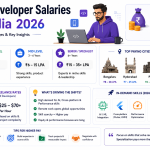
Entry-level Salesforce administrator roles in India’s major tech hubs currently see salaries ranging from roughly 5 to 10 lakhs per annum for candidates holding the Salesforce Certified Administrator credential, with entry-level developer roles commanding a modest premium given the additional coding skill required. Mid-level Salesforce developers holding three to six years of experience alongside Platform Developer certifications typically command 15 to 30 lakhs depending on company size and the complexity of the Salesforce implementations they work on. Senior Salesforce architects and technical leads at larger enterprises or dedicated Salesforce consulting firms can reach 40 lakhs and well beyond, particularly with advanced architect-level certifications and a track record of leading genuinely complex, multi-cloud Salesforce implementations.
For professionals currently working in general software development or business analysis roles who want to transition into the Salesforce ecosystem, the most effective path tends to combine structured Trailhead learning with deliberate certification pursuit, since this field rewards demonstrated, verified platform competency more directly than almost any other technology specialization. Volunteering to take on a Salesforce configuration or customization task at a current job, even a modest one, builds exactly the kind of practical, platform-specific experience that separates a credible candidate from someone who has only studied for certification exams without applying that knowledge to a real business problem. Building a personal Trailhead badge portfolio and pursuing certifications in a genuine, structured progression, Administrator before Platform Developer, tends to signal serious, methodical commitment to Indian employers evaluating candidates for this specific ecosystem.
Conclusion
Salesforce development and administration has become one of the more clearly defined and consistently in-demand career paths within India’s enterprise technology sector, benefiting from an unusually structured, employer-trusted certification ecosystem that reduces hiring uncertainty for both sides. For professionals willing to work methodically through Salesforce’s own Trailhead learning platform and certification progression, 2026 remains an excellent year to pursue this path, with demand continuing to grow steadily as more companies across every industry deepen their investment in the platform.