Technical writing has become a genuinely valuable, specialized career path within India’s growing tech industry, sitting at the intersection of clear communication and enough technical understanding to accurately document complex software products, APIs, and internal processes that developers themselves often don’t have time to write up properly. The field rewards demonstrated clarity and genuine technical comprehension through real writing samples more than a specific engineering degree, making it accessible to candidates from English, journalism, or even non-writing technical backgrounds willing to develop the specific documentation skill set. Here’s a realistic path into technical writing for someone starting from outside the field. Genuine curiosity about how things actually work under the hood matters just as much here as raw writing talent, since the best technical writing comes from truly understanding the subject first.
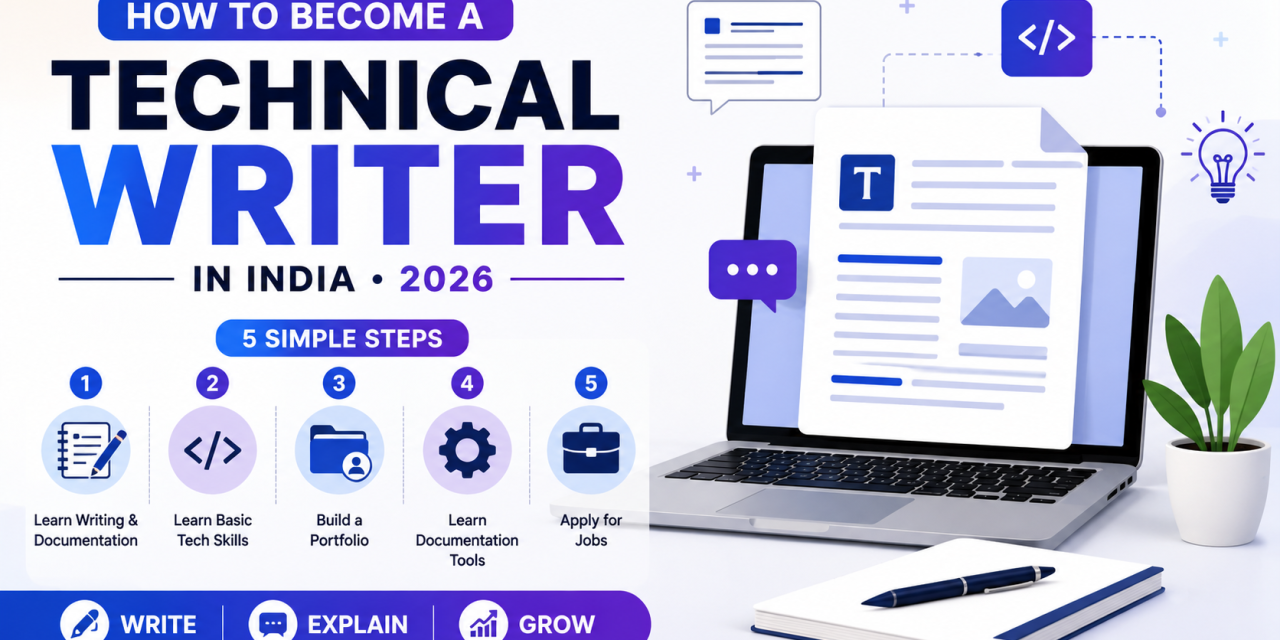
Learn Documentation Tools and Formats
Genuine familiarity with tools like Markdown, static site generators for documentation, and API documentation platforms like Swagger or Postman forms the practical foundation most technical writing roles expect candidates to already have some comfort with.
Build a Portfolio of Sample Documentation
Writing genuine sample documentation for an existing open-source project or a personal side project, a clear API guide or a user manual, demonstrates real capability that a general writing portfolio without technical documentation samples doesn’t fully prove.
Develop Enough Technical Understanding to Ask Good Questions
Technical writers don’t need to code at an engineer’s level, but genuine comfort reading code, understanding basic software architecture concepts, and asking developers precise, well-informed questions meaningfully separates a strong technical writer from someone who can only paraphrase what they’re told.
Learn Information Architecture Principles
Understanding how to structure documentation logically, organizing content so a reader can actually find what they need quickly, matters as much as sentence-level writing quality, and this skill differentiates genuinely effective technical writing from merely grammatically correct prose.
Target the Right Entry Roles
Junior technical writer, documentation specialist, and API writer roles at Indian software companies and IT services firms typically offer the most realistic entry points, often paying between four and seven lakhs annually to start, with senior technical writers specializing in complex domains like developer tools or fintech earning considerably more as their portfolio and technical depth grows.
Candidates coming from an engineering or QA background often have a genuine advantage transitioning into technical writing, since the existing technical comprehension shortens the learning curve considerably compared to someone starting purely from a writing background with no technical exposure at all. It’s worth building relationships directly with developers when starting a first technical writing role, since accurate documentation depends heavily on genuinely good working relationships with the engineers who actually understand the systems being documented. Free resources like the Google Developer Documentation Style Guide and various API documentation tutorials offer genuinely practical starting points for building both the sample portfolio and the underlying skill set before applying to formal roles.
Technical writing in India rewards genuine clarity and technical comprehension over formal writing credentials more clearly than many writing-adjacent careers, opening a real path for candidates from technical or writing backgrounds alike. Build documentation tool familiarity, create a portfolio of real technical writing samples, and target junior technical writer or documentation specialist roles rather than waiting for a senior opening to appear before gaining that crucial first real documentation experience. The best technical writers tend to be the ones who never stopped asking clarifying questions long after it might have felt easier to just guess.