Today, businesses have access to many ready-made software tools. There are apps for accounting, customer management, project management, communication, marketing, booking, payments, reports, and almost every common business function.
Because of this, some people think custom app development is no longer needed. They believe businesses can simply subscribe to existing software and avoid building anything from scratch.
Ready-made tools are useful. They are quick to start, often cheaper in the beginning, and suitable for common needs. But they do not always solve every problem. Many businesses have unique workflows, industry requirements, customer journeys, and internal processes that standard software cannot handle properly.
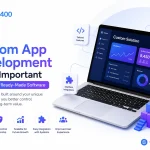
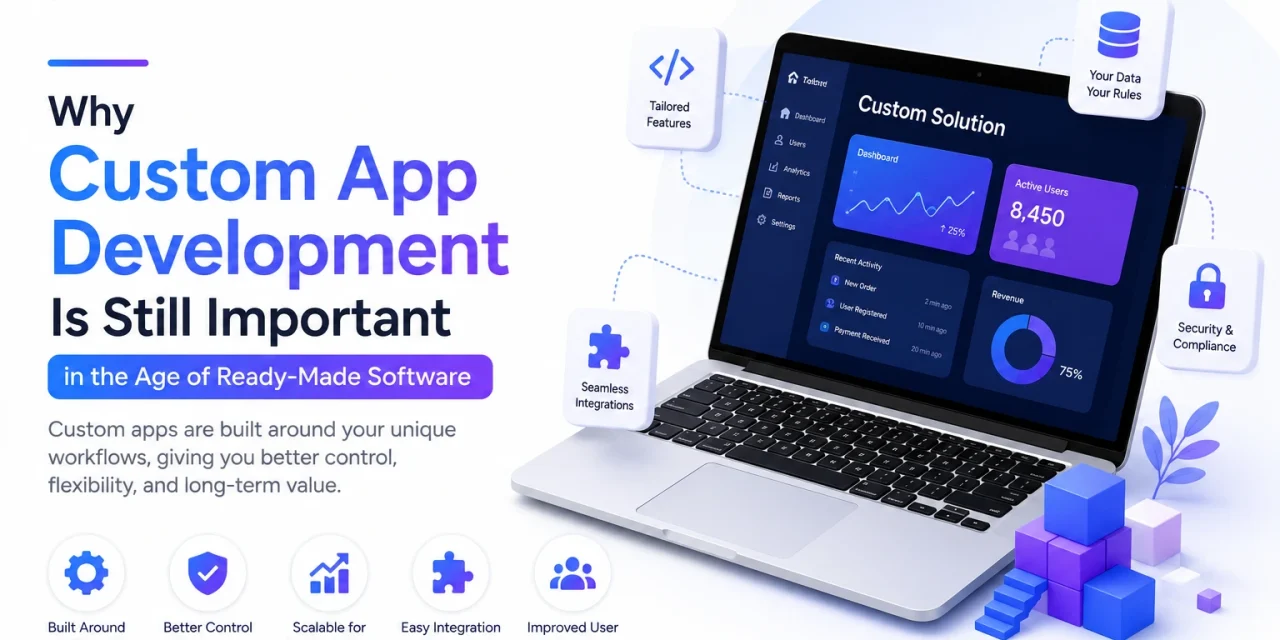
This is why custom app development is still important. It helps businesses build software around their real needs instead of forcing the business to adjust fully around an existing tool.
For startups, indie developers, software companies, and internet entrepreneurs, custom software creates opportunities to build products that solve specific problems and deliver long-term value.
Ready-Made Software Works for Common Needs
Ready-made software is a good choice when the requirement is simple and common. For example, a small business may use a standard accounting tool, CRM, email marketing platform, or project management app.
These tools help businesses start quickly. They do not require long development time. They usually include updates, support, documentation, and integrations.
For many early-stage businesses, this is enough. If the process is simple, ready-made software can save time and cost.
But problems begin when the business process becomes more specific. The company may need special reports, custom user roles, unique approval flows, industry-specific data fields, or integration with internal systems. At that point, ready-made software may become limiting.
Every Business Has Its Own Workflow
No two businesses work in exactly the same way. Even companies in the same industry may follow different processes.
One clinic may need simple appointment booking. Another clinic may need patient records, prescriptions, lab reports, billing, follow-up reminders, and doctor-wise dashboards. One logistics company may need only delivery tracking. Another may need route planning, proof of delivery, agent attendance, expense tracking, and customer alerts.
Ready-made software usually supports a standard workflow. Custom app development allows the software to match the business workflow more closely.
When software follows the real workflow, employees can work faster. They do not need to depend on extra spreadsheets, manual notes, or repeated data entry. The system becomes part of the business instead of an external tool.
Custom Apps Give Better Control
One major advantage of custom app development is control. The business can decide how the software should work, what features should be included, how data should be stored, and how users should access the system.
With ready-made software, the business depends on the vendor. If the vendor changes pricing, removes features, limits access, or does not support a required workflow, the business has limited options.
With custom software, the business has more ownership. It can improve the product step by step. It can add features based on user feedback. It can connect with other systems when needed. It can also maintain its own product direction.
This control is especially useful for startups that want to build a software product as their main business.
Better Fit for Industry-Specific Needs
Many industries need software that understands their specific language and operations. Healthcare, education, logistics, finance, real estate, legal services, and manufacturing all have different requirements.
Generic software may not provide the exact fields, reports, permissions, or workflows needed by these industries.
For example, healthcare software may need patient profiles, doctor notes, appointment history, prescriptions, lab reports, billing, and secure access control. These needs are very different from a general CRM or booking tool. Businesses planning such platforms often work with a specialized [healthcare software development company](https://gegosoft.com/healthcare-software-development-company-in-india/) to build secure, scalable, and practical healthcare applications.
Custom development becomes valuable when the industry workflow is too important to compromise.
Custom Software Can Improve User Experience
A ready-made tool is built for many types of users. Because of this, it may include many features that a specific business does not need. This can make the interface crowded or confusing.
Custom app development allows the product to be designed for a specific user group. The screens, forms, buttons, dashboards, and reports can be planned around the real users.
For example, an app for field agents should be mobile-friendly, fast, and simple. An app for doctors should show patient information clearly. An app for business owners should show quick reports and alerts. An app for customers should reduce steps and make actions easy.
Good user experience increases adoption. When users find the software easy, they are more likely to use it regularly.
Scalability Can Be Planned Properly
A business may start small, but its software needs can grow over time. More users, more data, more locations, more reports, and more integrations may be needed later.
Custom app development allows scalability to be planned based on the business vision. The first version can start as an MVP, but the architecture can support future growth.
For example, a startup may first build a simple web app. Later, it may add a mobile app, admin panel, API integrations, payment system, analytics, AI features, or multi-tenant support.
If the foundation is planned well, the product can grow without needing a complete rebuild.
Integration Becomes Easier
Modern businesses use multiple tools. They may use payment gateways, email services, SMS platforms, WhatsApp APIs, accounting software, CRM tools, cloud storage, analytics tools, and AI services.
Custom apps can be built to integrate with these systems. This reduces manual work and improves data flow.
For example, a custom booking system can send reminders through WhatsApp, collect payments online, update the admin dashboard, and generate reports automatically.
Ready-made tools may support integrations, but they may not always match the exact business requirement. Custom software gives more freedom to design integrations properly.
Custom Apps Can Support Automation
Automation is one of the biggest reasons businesses invest in custom software. Many teams spend time on repeated tasks such as data entry, follow-ups, report generation, approvals, reminders, and status updates.
Custom apps can automate these tasks based on the business process.
For example, a service business can automatically assign tasks to staff. A clinic can send appointment reminders. A SaaS app can trigger onboarding emails. A finance app can generate monthly reports. A field service app can calculate travel expenses based on location data.
Automation saves time and reduces human error. It also helps businesses deliver better service to customers.
Custom Development Is Useful for Startups
For startups, custom app development is often necessary because the software itself is the business. A startup cannot always depend on existing tools if it wants to create a unique product.
The startup may begin with an MVP. The MVP should include only the most important features. After launch, the product can improve based on user feedback.
Custom development gives the founder flexibility to test ideas, change workflows, add new modules, and build a product that is different from competitors.
This is important because strong software products are not built by copying features alone. They are built by solving a problem in a better way.
Cost Should Be Viewed as Investment
Custom app development can cost more than subscribing to a ready-made tool, especially in the beginning. But the cost should be viewed based on long-term value.
If custom software saves staff time, improves customer experience, reduces manual work, supports growth, or becomes a revenue-generating product, it can give strong returns.
The key is to start with proper planning. Businesses do not need to build everything at once. They can begin with a focused version, test it, and improve it phase by phase.
This approach keeps cost under control while still moving toward a custom solution.
Conclusion
Custom app development is still important because businesses are not all the same. Ready-made software can solve common problems, but custom software can solve specific problems in a better way.
For startups, indie developers, software companies, and internet entrepreneurs, custom apps create opportunities to build useful products, automate workflows, improve user experience, and support long-term growth.
Every successful software product starts with a clear problem and a practical idea. When that idea is developed with the right strategy, technology, and user-focused design, it can become software that helps people work better, businesses grow faster, and entrepreneurs turn their vision into reality.