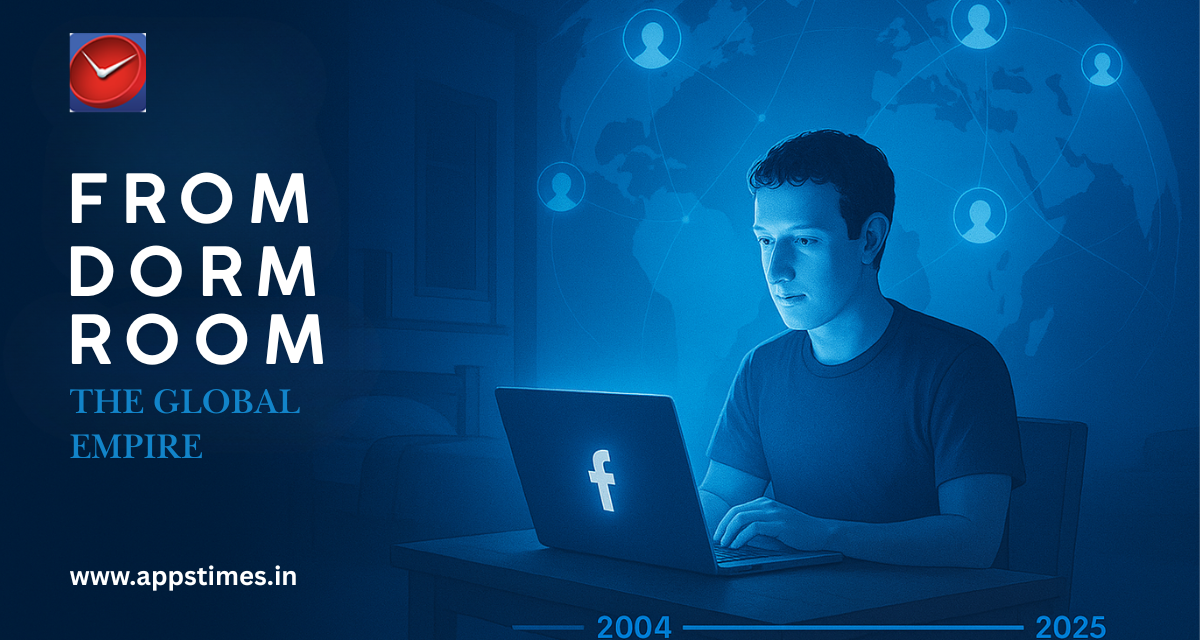
Settle in for one of the most fascinating stories in tech history. This is the tale of how a 19-year-old college student created an app that would connect nearly half the world’s population
The Beginning: A Boy with Extraordinary Talent
In the spring of 1984, in White Plains, New York, a baby boy was born named Mark Elliot Zuckerberg. His father was a dentist, and his mother was a psychiatrist—both brilliant professionals who nurtured their son’s curious mind
Young Mark showed exceptional talent early on. At just 12 years old, he created a messaging program called “Zucknet” using Atari BASIC. His father used this program in his dental office so the receptionist wouldn’t have to shout across the office when patients arrived. Imagine—a 12-year-old solving real business problems with code !
Mark was no ordinary student. He was a wizard of computers, someone who could see possibilities where others saw limitation
The Harvard Years: Where Dreams Take Shape
Mark attended Phillips Exeter Academy in New Hampshire, excelling in classics and fencing. But his real passion remained computers—building programs that helped people communicate, share music, and connect.
At 18, he enrolled at Harvard University, one of the world’s most prestigious institutions. There, surrounded by brilliant minds and endless possibilities, he continued experimenting with social networking concepts.
But here’s where our story becomes extraordinary
A Cold Winter Night and a Revolutionary Idea
It was February 4, 2004—a cold winter night in Cambridge, Massachusetts. Mark was only 19 years old, a sophomore living in his cramped dorm room. While his roommates studied nearby, Mark was coding something special
He had a deceptively simple idea: “What if all Harvard students could see each other’s profiles in one central digital space? What if they could connect with friends, share photos, and communicate—all from their computers?
Working late into the night, he launched a website called “The Facebook”—named after the paper directories colleges distributed with student photos and information
The Magic Spreads: Viral Growth Before “Viral” Was a Thing
What happened next was unprecedented in tech history. By the following morning, over 1,000 students had registered. Within 24 hours, half of Harvard’s undergraduate population had accounts !
The response was electric. Students loved the ability to browse classmates’ profiles, reconnect with old friends, and expand their social circles. It was like having a digital campus that never closed
Mark had help from four talented friends: Eduardo Saverin (business), Andrew McCollum (graphics), Dustin Moskovitz (programming), and Chris Hughes (communications). Together, this team worked tirelessly to scale the platform as demand exploded
From Harvard to the World: Explosive Growth
The success at Harvard was just the beginning. Students from other universities clamored for access. “Why can’t we have Facebook at our school?” they demanded
Facebook expanded strategically—first to other Boston schools, then Ivy League institutions, and gradually across the United States and Canada. Each new campus addition brought thousands of new users
By December 2004—just ten months after launch—Facebook had 1 million users. The platform that started in a dorm room was becoming a phenomenon
The Billion-Dollar Decision
After his sophomore year, Mark faced a life-changing choice. Continue at Harvard, or bet everything on Facebook ?
He made the bold, terrifying decision to drop out. His parents must have been concerned—their brilliant son leaving Harvard!—but Mark had conviction. He believed Facebook could connect not just students, but the entire world
Peter Thiel, PayPal’s co-founder, believed in this vision too. He invested $500,000, giving Facebook the runway it needed. Mark packed his bags and headed to Palo Alto, California, establishing Facebook’s first real office
Opening the Gates: Facebook for Everyone
The years that followed brought explosive growth :
2006: Facebook opened to everyone aged 13 and older with an email address. No longer just for students, it became a platform for parents, professionals, and people worldwide
2007: Facebook Platform launched, allowing third-party developers to create apps and games. This ecosystem approach accelerated growth exponentially
2008: Facebook surpassed MySpace to become the world’s most-visited social networking site. Mark, at just 23 years old, became the youngest self-made billionaire in history
2012: Facebook reached 1 billion monthly active users. One-seventh of humanity was now connected through Mark’s creation
The Public Offering: Making History
May 18, 2012, marked another milestone. Facebook went public with the third-largest IPO in U.S. history, raising $16 billion and valuing the company at $104 billion
Mark became one of the world’s wealthiest individuals. But money wasn’t his primary motivation—connection was
When Yahoo offered $1 billion for Facebook in 2006, Mark declined. He wasn’t building a company to sell; he was building a company to change how humans communicate
Love, Partnership, and Purpose
Behind every great success is often a great partnership. Mark met Priscilla Chan in 2003 while waiting in line for the bathroom at a Harvard fraternity party. Yes, really—sometimes magic happens in the most ordinary moments !
They married in 2012, the day after Facebook’s IPO. Together, they embarked on a mission bigger than business: using their fortune to solve humanity’s greatest challenges
Giving Back: The Chan Zuckerberg Initiative
In December 2015, when their daughter Maxima was born, Mark and Priscilla published an open letter announcing an extraordinary commitment: they would donate 99% of their Facebook shares—worth approximately $45 billion—to philanthropic causes through the Chan Zuckerberg Initiative
Their focus areas include:
- Personalized learning and education
- Curing diseases
- Connecting people and building strong communities
- Criminal justice reform
This wasn’t just corporate philanthropy—it was a genuine commitment to using technology and resources to create a better future
Facebook Today: A Global Force
Today, Facebook (now under the parent company Meta) connects nearly 3 billion monthly active users—almost 40% of Earth’s population. The platform has fundamentally changed :
How We Communicate: Instant messaging, video calls, and status updates have replaced phone calls and letters for billions
How We Share News: For better or worse, Facebook has become a primary news source for millions worldwide
How Businesses Operate: From local shops to global brands, businesses rely on Facebook for marketing, customer service, and sales
How Movements Organize: Social and political movements leverage Facebook’s reach to mobilize supporters and drive change
Evolution and Controversy
Facebook’s journey hasn’t been without challenges. The platform has faced criticism regarding :
- Privacy concerns and data handling
- The spread of misinformation
- Impact on mental health
- Market dominance and competition
Mark has acknowledged these challenges, saying, “When you connect more than 3 billion people, you’re going to see all of humanity—the good, the bad, and the ugly.”
The Metaverse Vision: Building the Future
In October 2021, Mark announced Facebook’s transformation to “Meta,” signaling a bold new direction toward building the metaverse—immersive virtual and augmented reality experiences that could represent the next evolution of social connection
This pivot shows Mark’s continued ambition: not just to rest on Facebook’s success, but to pioneer the next frontier of human interaction
The Lessons from This Extraordinary Journey
What can entrepreneurs and developers learn from Facebook’s story ?
Start Simple, Scale Fast: Facebook began as a simple directory. Its core value—connecting people—remained constant while features evolved
Solve Real Problems: Mark didn’t invent social networking; he made it better, more accessible, and more valuable
Network Effects Matter: Each new user made Facebook more valuable for existing users, creating a powerful growth flywheel
Bold Decisions Pay Off: Dropping out of Harvard, turning down billion-dollar offers, and pivoting to Meta—Mark consistently chose long-term vision over short-term safety
Give Back: With great success comes great responsibility. The Chan Zuckerberg Initiative demonstrates that building wealth can be a means to solving humanity’s greatest challenges
Age Is No Barrier: Mark was 19 when he launched Facebook, 23 when he became a billionaire. Revolutionary ideas don’t require decades of experience
Where the Story Stands Today
As of 2025, Mark Zuckerberg’s net worth exceeds $251 billion, making him the third-richest person globally. But numbers don’t capture the full story
Facebook transformed from a college networking site into the world’s largest social media platform. It democratized communication, enabled global movements, launched millions of small businesses, and yes, created controversies that society is still grappling with
Mark continues to lead Meta’s ambitious metaverse development, investing billions in technologies that might define how future generations interact, work, and play
The Story Continues
This story isn’t over. It’s still being written every day by Mark, the Meta team, and the billions of people who use Facebook to stay connected.
What started in a Harvard dorm room on a cold February night became something that changed human history. It proved that one person with an idea, some coding skills, and unwavering conviction can literally change how the world communicates.
The next chapter? That’s being written right now. And perhaps you, reading this on AppsTimes, might write a similar story of your own.
After all, every revolutionary app starts with someone brave enough to build it.
The journey continues…