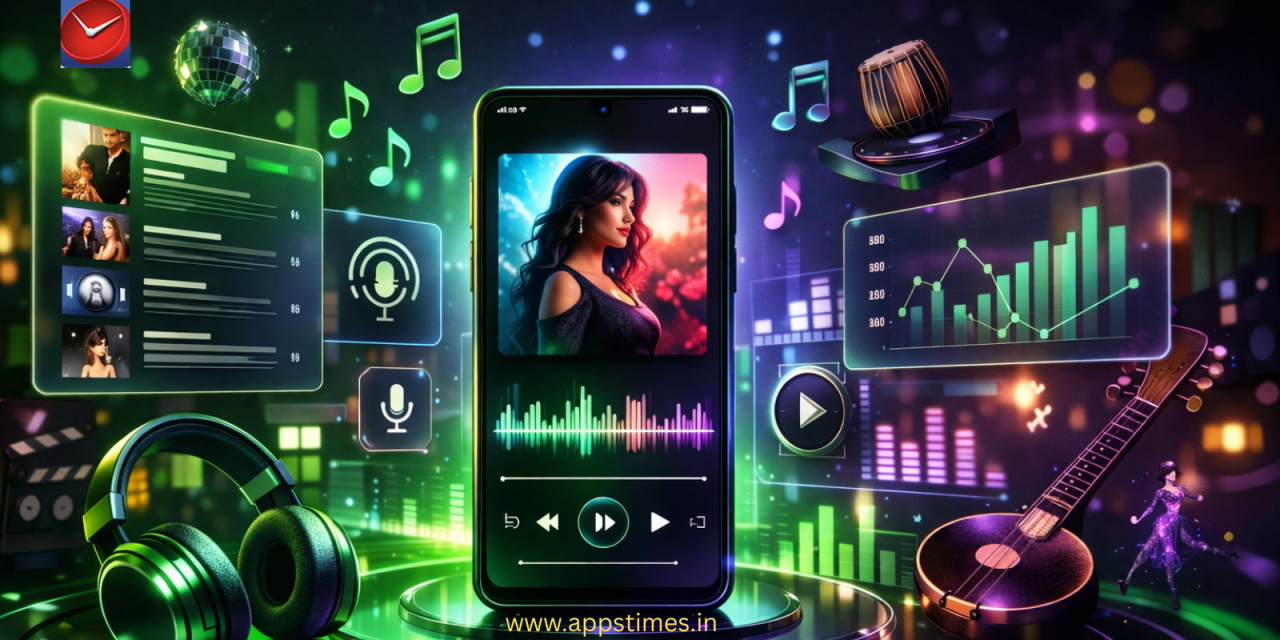
Spotify dominates India’s music streaming landscape with 78 million active users, transforming how Indians discover, enjoy, and share music. From Bollywood hits and devotional bhajans to international pop and regional folk, Spotify’s 100+ million song library promises something for every taste. The platform generated ₹2,400 crore in Indian revenue during 2024, proving that Indians enthusiastically embrace ad-supported and premium streaming. But with formidable competitors like YouTube Music, Apple Music, JioSaavn, and Gaana vying for ears, does Spotify justify its market leadership? This comprehensive review examines Spotify’s features, audio quality, pricing, music discovery algorithms, and whether it delivers the best streaming experience for Indian listeners across diverse musical preferences and budgets
What Makes Spotify Special?
Spotify pioneered modern music streaming when it launched in Sweden in 2008, arriving in India in 2019 after years of anticipation. The platform revolutionized music consumption by offering legal, unlimited access to vast libraries for free (with ads) or ad-free (with subscription). Spotify’s secret weapon isn’t just library size—competitors match that—but rather its algorithmic recommendations, personalized playlists, and social features creating musical discovery experiences competitors struggle to replicate. The platform understands your taste through machine learning, serving songs you’ll love before you know you want them
Music Library: Breadth and Depth
100+ Million Songs Across Genres
Spotify’s catalog spans virtually every genre imaginable—pop, rock, hip-hop, classical, jazz, electronic, country, metal, indie, and hundreds more. Indian users particularly appreciate extensive Bollywood coverage (old and new), regional language music (Tamil, Telugu, Punjabi, Bengali, Marathi), devotional content (bhajans, kirtan, qawwali), and independent Indian artists gaining platforms. International music discovery is Spotify’s strength—explore K-pop, Latin reggaeton, African afrobeat, or Scandinavian metal with equal ease.
Podcasts and Audiobooks
Spotify hosts 5+ million podcast episodes covering comedy, news, true crime, business, sports, education, and storytelling. Popular Indian podcasts include The Ranveer Show, IVM Podcasts network, and BBC Hindi. The platform invested billions acquiring podcast companies (Gimlet, Anchor, Parcast) and exclusive shows from Joe Rogan, Michelle Obama, and others. Audiobooks recently joined the library, though this feature remains limited compared to dedicated audiobook services
Regional and Independent Artists
Spotify democratizes music distribution, allowing independent artists to upload directly through distributors without record label deals. This accessibility means discovering underground rappers from Mumbai, folk singers from Rajasthan, indie bands from Bangalore, and classical musicians preserving traditional forms. The platform pays artists per stream (controversial rates, discussed later), creating income opportunities for musicians globally
Core Features: What You Can Do
Personalized Playlists That Actually Work
Spotify’s algorithmic playlists are legitimately magical. Discover Weekly delivers 30 songs every Monday based on your listening habits—consistently introducing new music matching your taste. Release Radar surfaces new releases from artists you follow plus similar acts. Daily Mix creates genre-specific playlists blending favorites with new discoveries. Daylist (new in 2024) generates playlists matching your mood throughout the day—energetic mornings, focused afternoons, relaxed evenings. These algorithms leverage massive data from 600+ million global users, learning what works and serving it perfectly. For entrepreneurs interested in trending app ideas for 2026, Spotify demonstrates how machine learning creates addictive personalization.
Search and Discovery Tools
Search functionality works brilliantly—find songs by lyrics snippets (“song with ‘twinkle’ in it”), moods (“happy workout music”), or contexts (“songs for long drives”). Genre and mood playlists curated by Spotify’s editorial team provide jumping-off points for exploration—Bollywood Romance, Chill Vibes, Beast Mode, Desi Hip-Hop, and thousands more. Artist Radio generates stations based on any artist, playing similar acts and styles
Social Sharing and Collaborative Playlists
See what friends are listening to in real-time, share songs or playlists via WhatsApp/Instagram, and create collaborative playlists where multiple people add songs—perfect for road trips, parties, or shared workspaces. Blend playlists merge your taste with a friend’s, generating shared mixes. These social features make music discovery communal rather than solitary, encouraging sharing and discussion.
Lyrics Integration
Real-time scrolling lyrics display for millions of songs (powered by Musixmatch), letting you sing along accurately, understand foreign languages, or appreciate poetic wordplay. Lyrics availability varies—major hits usually include them while obscure tracks sometimes lack transcriptions.
Offline Downloads
Premium subscribers download songs, albums, and playlists for offline listening—crucial for Indian users with limited mobile data or unreliable connectivity during commutes. Download quality adjusts for storage constraints (Normal, High, Very High quality options).
Cross-Device Synchronization
Start listening on your phone during commute, continue on laptop at work, then switch to smart speaker at home—playback syncs seamlessly across devices. The desktop app provides superior control for serious listening sessions while mobile works for on-the-go convenience.
Car Integration
Spotify Car Thing (hardware device) and native integration with Android Auto/Apple CarPlay make road trips safer and more enjoyable. Voice commands let you control music without touching your phone while driving
Spotify Pricing: Free vs Premium Plans
Free Tier
Spotify’s free version provides full library access—100+ million songs and 5+ million podcasts—with limitations. Advertisements interrupt every 15-30 minutes (audio ads between songs, video ads occasionally). Shuffle-only playback on mobile (you can’t select specific songs on-demand, only shuffle albums/playlists). No downloads for offline listening. Limited skips (6 per hour). Lower audio quality (160 kbps). Despite restrictions, the free tier genuinely works for casual listeners willing to tolerate ads and reduced control. Understanding app monetization strategies reveals how Spotify’s freemium model converts users from ad-supported to premium naturally.
Spotify Premium Individual: ₹119/month
Premium removes all advertisements, enables on-demand playback (select any song anytime), allows unlimited skips, provides offline downloads, delivers higher audio quality (up to 320 kbps), and adds exclusive features like lyrics and audiobooks. For daily listeners, ₹119 monthly (₹4 daily) easily justifies the dramatically improved experience and convenience. India’s pricing is significantly lower than global rates (US: $10.99) reflecting local purchasing power.
Spotify Premium Duo: ₹149/month for 2 accounts
Couples or roommates sharing an address save ₹89 monthly compared to two individual subscriptions. Each person gets separate accounts with personalized recommendations and listening history. Duo Mix playlists blend both users’ tastes for shared listening sessions
Spotify Premium Family: ₹179/month for 6 accounts
Families living at the same address get six Premium accounts (₹30 per person)—exceptional value compared to ₹119 individual plans. Family Mix creates playlists everyone enjoys while Kids accounts provide age-appropriate content with parental controls. This plan makes Premium affordable for entire households, eliminating ad frustrations during family time.
Spotify Premium Student: ₹59/month
Verified students (university email required) get Premium at 50% discount—₹708 yearly versus ₹1,428 regular pricing. Verification renews annually, continuing discounts throughout college years. This makes Premium accessible for budget-conscious students who consume music heavily
Audio Quality: How Does It Sound?
Spotify Free streams at 160 kbps (medium quality) while Premium offers up to 320 kbps AAC format—perceptibly better but not audiophile-grade. Serious listeners with expensive headphones notice quality differences, while casual users with standard earbuds find Premium quality excellent. Spotify HiFi (lossless CD-quality audio) was announced in 2021 but remains unreleased in 2026, disappointing audiophiles who migrated to Apple Music, Tidal, or Amazon Music for lossless streaming. For most Indian users with Bluetooth earbuds or car audio, 320 kbps Premium quality suffices perfectly.
User Experience and Interface Design
Mobile App
Spotify’s mobile interface prioritizes discovery through Home, Search, and Library tabs. The dark theme reduces eye strain and battery consumption on OLED screens. Navigation feels intuitive with swipe gestures controlling playback, queue management, and playlist editing. The Now Playing screen shows lyrics, artist info, and upcoming queue clearly. However, the app can feel cluttered—constant promotional banners for podcasts and new features sometimes overwhelm the music experience
Desktop Application
The desktop app provides superior control and visualization for serious listening. Larger screens make playlist management, search, and discovery easier than cramped mobile interfaces. Keyboard shortcuts accelerate common actions. However, the desktop app sometimes feels like a blown-up mobile interface rather than purposefully designed desktop software—missing opportunities for power user features.
Web Player
The browser-based player works when you can’t install apps (office computers, public terminals) but lacks offline downloads and some features. Quality and functionality match the desktop app otherwise
Music Discovery: The Real Magic
Spotify’s recommendation algorithms are genuinely impressive—eerily accurate at predicting what you’ll enjoy. The system analyzes listening habits, song characteristics (tempo, key, mood, instrumentation), collaborative filtering (what similar users enjoy), and natural language processing (how people describe music online). Discover Weekly rarely misses, consistently introducing new artists fitting your taste. Release Radar catches new music from artists you follow plus recommendations. The algorithm occasionally creates echo chambers—overemphasizing what you already like rather than pushing boundaries—but manually exploring genres or following editorial playlists counteracts this tendency.
Spotify for Indian Users: Specific Considerations
Regional Content Coverage
Spotify invested heavily in Indian content, licensing major Bollywood catalogs, regional music, and independent artists. However, some legacy Bollywood classics remain absent due to complex licensing. Competitors like JioSaavn or Gaana sometimes offer better regional and old Hindi film music coverage. For Tamil, Telugu, and Punjabi music, Spotify competes well with comprehensive catalogs
Data Usage
Streaming quality settings control data consumption—Low (24 kbps) uses ~1 MB per minute, Normal (96 kbps) uses ~3 MB per minute, High (160 kbps) uses ~5 MB per minute, Very High (320 kbps, Premium only) uses ~8 MB per minute. On limited mobile plans, Normal quality balances sound and data reasonably. Premium’s offline downloads eliminate data concerns entirely—download on Wi-Fi, listen anywhere without mobile data consumption.
Payment Methods
Spotify accepts credit/debit cards, UPI, Paytm, Google Pay, and mobile wallets—covering Indian payment preferences comprehensively. The platform occasionally offers promotional pricing (₹59 for 3 months) attracting trial users. For developers building apps, studying Spotify’s approach through development frameworks reveals successful monetization and engagement patterns
Comparison with Competitors
Spotify vs YouTube Music
YouTube Music offers similar free tier with ads, comparable library size, and superior music video integration. Premium costs ₹99/month (₹20 cheaper). YouTube Music includes YouTube Premium (ad-free videos), adding significant value. However, Spotify’s recommendations and curated playlists outperform YouTube Music’s algorithm. Choose YouTube Music for video content integration; choose Spotify for pure audio experience and discovery.
Spotify vs Apple Music
Apple Music costs ₹99/month with no free tier, offering lossless audio quality and deeper iOS/Mac integration. Apple Music lacks Spotify’s social features and algorithmic playlists. Apple users heavily invested in the ecosystem might prefer Apple Music’s seamless integration, while cross-platform users benefit from Spotify’s device-agnostic approach.
Spotify vs JioSaavn
JioSaavn costs ₹99/month (₹399/year) with superior Bollywood and regional Indian music catalogs. However, international music discovery, recommendations, and app quality favor Spotify. Indian-focused listeners prioritizing Bollywood might prefer JioSaavn; global music enthusiasts choose Spotify.
Limitations and Concerns
Artist compensation remains controversial—Spotify pays ₹0.30-0.50 per stream, requiring millions of plays for meaningful income. Independent artists struggle while streaming platforms profit handsomely. Missing HiFi quality disappoints audiophiles despite years of promises. The free tier’s shuffle-only mobile listening frustrates users wanting specific song playback. Occasional licensing disputes remove popular artists or albums temporarily. Algorithm-driven discovery sometimes creates monotonous echo chambers rather than expanding musical horizons. Podcast focus feels forced—many users want pure music apps without podcast clutter. For entrepreneurs exploring no-code app builders, understanding these user frustrations reveals opportunities for alternative platforms addressing unmet needs.
Who Should Use Spotify?
Perfect For
Music enthusiasts wanting algorithmic discovery and personalized playlists. Cross-platform users needing seamless experience across iPhone, Android, Windows, Mac, smart speakers. Social listeners sharing music and following friends’ activity. International music explorers beyond Bollywood and regional Indian content. Budget-conscious listeners satisfied with ad-supported free tier. Students getting 50% discount making Premium affordable. Families splitting costs across six accounts via Family plan. For developers learning about successful apps through app startup guides, Spotify exemplifies network effects and data-driven personalization.
Not Ideal For
Audiophiles requiring lossless audio quality (choose Apple Music or Tidal instead). Users prioritizing Bollywood deep cuts and regional classics (JioSaavn offers better coverage). People wanting integrated video content (YouTube Music provides better value). Listeners unwilling to pay who dislike ad interruptions (YouTube Music’s free tier allows on-demand playback).
Final Verdict: Is Spotify Worth It?
Spotify delivers exceptional value across free and premium tiers, justifying its position as India’s leading music streaming platform. The free version provides genuine utility for casual listeners willing to tolerate ads, while Premium transforms the experience into seamless, ad-free musical bliss for just ₹119 monthly. Spotify’s true strength lies not in library size—competitors match that—but in algorithmic magic surfacing music you’ll love and social features making discovery communal. For Indian users specifically, competitive pricing, comprehensive payment options, and growing regional content make Spotify increasingly compelling. Start with the free version exploring features and recommendations for 30 days. If you find yourself using Spotify daily and craving ad-free, on-demand control, Premium’s ₹4 daily cost easily justifies the convenience and quality. Family plans (₹30 per person) make Premium accessible for entire households. While competitors excel in specific areas—Apple Music for audio quality, JioSaavn for Bollywood depth—Spotify delivers the most well-rounded streaming experience for diverse listeners. Your perfect soundtrack awaits—download Spotify today and let the algorithms introduce you to your next favorite artist.