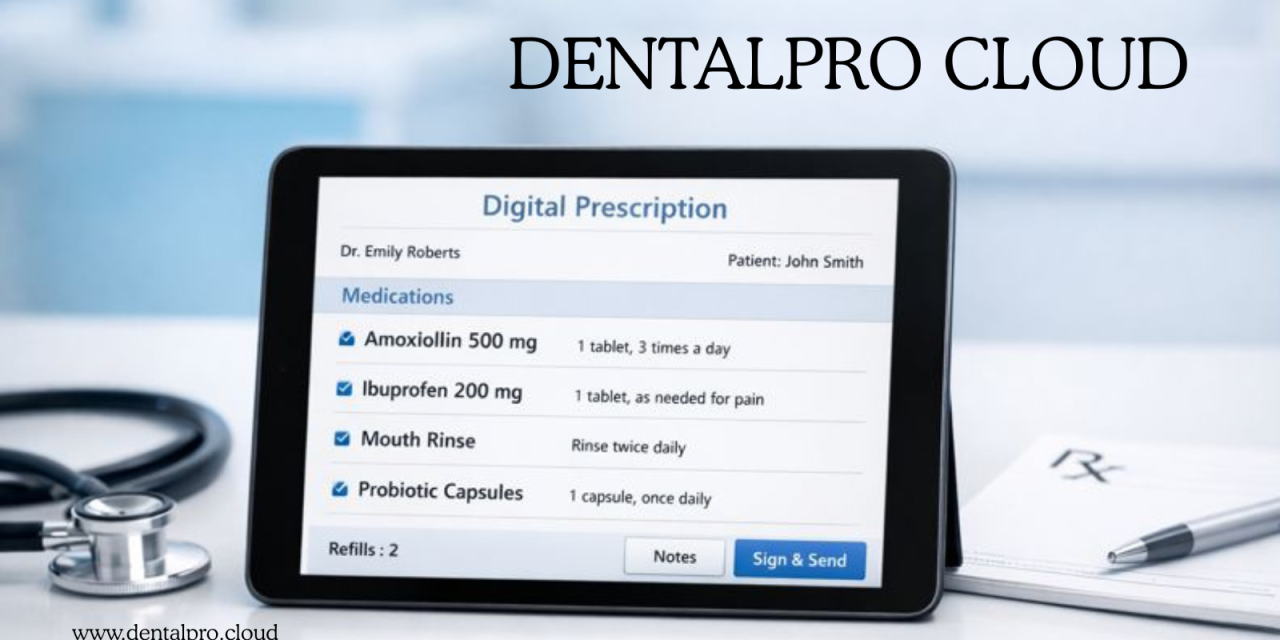
Prescription writing represents a fundamental dental responsibility with significant safety implications. Traditional handwritten prescriptions introduce avoidable risks through illegible handwriting, transcription errors, and missed drug interactions. Electronic prescribing eliminates these vulnerabilities while improving efficiency for both practices and patients
The Problem with Paper Prescriptions
Handwriting interpretation challenges have plagued healthcare for generations. Pharmacists frequently contact dental offices seeking clarification on medication names, dosages, or patient names. These interruptions disrupt practice flow while delaying patient medication access.
Prescription fraud represents another concern with paper systems. Physical prescription pads can be stolen, altered, or counterfeited, contributing to controlled substance diversion. Electronic systems with authentication requirements and tracking capabilities dramatically reduce these security vulnerabilities.
Digital prescription capabilities in DentalPro Cloud address these longstanding challenges through secure, efficient electronic prescribing integrated with comprehensive practice management
How E-Prescribing Works
Electronic prescribing systems connect directly with pharmacy networks. When dentists write prescriptions, information transmits securely to the patient’s chosen pharmacy. Medications are often ready for pickup before patients leave the dental office.
Integration with the dental EMR system ensures prescriptions reference complete patient medical histories. Allergy lists, current medications, and previous adverse reactions inform prescribing decisions automatically, reducing oversight risks inherent in memory-dependent systems.
The prescribing interface presents searchable medication databases with standardized names and formulations. This structure eliminates ambiguity about drug selection, dosing, and duration. Dropdown menus and auto-complete features accelerate prescription writing while enforcing proper formatting
Medication Safety Features
Drug interaction checking represents one of digital prescribing’s most valuable safety features. The system analyzes new prescriptions against patients’ existing medications, alerting providers to potential interactions before submission.
Allergy checking prevents prescribing medications to which patients have documented sensitivities. Even with verbal screening during appointments, automated alerts provide additional safety layers, particularly valuable during busy clinical days when oversights might occur.
Dosing guidance based on patient age, weight, and renal function helps ensure appropriate prescription quantities and frequencies. While experienced practitioners rarely need such assistance, these features prove invaluable for newer providers and complex cases involving atypical patient populations
Prescription Monitoring Program Integration
Controlled substance prescribing requires particular vigilance given addiction risks and diversion concerns. Digital prescribing systems can integrate with state prescription drug monitoring programs (PDMPs), allowing dentists to review patients’ controlled substance prescription histories before prescribing.
This integration helps identify patients filling controlled substance prescriptions from multiple providers, a potential warning sign of diversion or addiction. Early identification enables compassionate intervention and appropriate pain management alternatives.
The modern dental practice approach balances effective pain management with responsible opioid prescribing. Digital tools support this balance through data visibility and decision support
Pharmacy Communication Efficiency
Electronic prescribing eliminates most pharmacy phone calls. Clarification requests that plagued paper prescription systems disappear when all information transmits clearly and completely. Staff time previously spent on pharmacy calls redirects to more productive activities.
When pharmacies identify legitimate concerns like insurance formulary issues or therapeutic alternatives, digital systems facilitate efficient communication. Messages appear in provider queues for review without interrupting current patient care.
Prescription renewal requests from pharmacies also flow through electronic channels. Providers can approve or modify renewals with quick reviews rather than scheduling callbacks and playing phone tag with pharmacy staff
Patient Convenience Improvements
Patients appreciate medications ready for pickup shortly after appointments. This convenience particularly benefits people with transportation challenges or busy schedules who can’t easily make separate pharmacy trips.
Electronic prescriptions also reduce pharmacy wait times. Since prescriptions arrive before patients, pharmacies can prepare medications during slower periods rather than making patients wait while prescriptions are filled.
Integration with smart booking systems means appointment scheduling can consider medication timing requirements. Follow-up appointments can align with prescription renewal needs or monitoring requirements for specific medications
Insurance and Formulary Management
Insurance formularies dictate which medications receive coverage, often frustrating both providers and patients when prescriptions require out-of-pocket payment or substitution. Electronic prescribing systems check formulary coverage in real-time, alerting providers to coverage issues before prescription submission.
Alternative medication suggestions appear when preferred drugs lack coverage. Providers can select appropriate covered alternatives immediately rather than requiring pharmacy callbacks and prescription rewrites. This proactive approach improves patient satisfaction and medication adherence by reducing cost barriers.
Prior authorization requirements also appear during prescription writing. While prior authorizations still require administrative work, early identification allows staff to initiate processes proactively rather than reacting to pharmacy denials after patients attempt pickup
Controlled Substance E-Prescribing
Federal regulations now allow and many states mandate electronic prescribing for controlled substances (EPCS). Implementation requires enhanced security measures including two-factor authentication and audit logging.
While EPCS implementation involves additional setup compared to standard e-prescribing, the benefits include improved tracking, reduced prescription fraud, and better compliance with regulatory requirements. The security features protecting practices from prescription pad theft and alteration justify the modest additional complexity
Documentation and Compliance
Electronic prescriptions create permanent, searchable records within patient charts. This documentation supports treatment reviews, audits, and medicolegal defense far better than paper prescription copies that might be lost or illegible.
Audit trails show exactly who prescribed medications, when, and with what indications. This accountability supports practice quality improvement initiatives and helps identify prescribing patterns that might benefit from adjustment.
Integration with AI documentation features means prescription decisions documented in clinical notes automatically link to actual prescriptions written. This connection ensures consistency between documented plans and executed care
Prescription History Access
Complete prescription histories within patient charts support continuity of care. When patients return for follow-up, providers can quickly review previous medications, assess effectiveness, and make informed adjustments.
This visibility proves particularly valuable for multi-provider practices where patients might not consistently see the same dentist. Complete medication records ensure every provider has information necessary for safe prescribing regardless of who managed previous care episodes
Multilocation Practice Benefits
Practices with multiple locations benefit significantly from electronic prescribing. Providers can access prescribing functionality from any location without carrying prescription pads or managing separate pharmacy relationships at each site.
The comprehensive services offered support complex multi-location operations through unified systems accessible everywhere. Prescription databases, patient records, and pharmacy connections work identically regardless of physical location
Training and Adoption
Electronic prescribing requires initial training but most providers achieve proficiency quickly. The efficiency gains and safety improvements rapidly demonstrate value, encouraging sustained adoption.
Staff training focuses on prescription verification, pharmacy communication management, and prior authorization initiation. While electronic systems automate many tasks, human oversight remains essential for appropriate medication management.
Measuring E-Prescribing Impact
Practices can track metrics demonstrating e-prescribing value. Pharmacy call reductions, prescription error rates, and time saved per prescription quantify efficiency improvements. Patient satisfaction scores and medication adherence rates reflect quality improvements.
The comprehensive benefits of integrated practice management extend beyond prescribing to every operational aspect. However, medication safety and efficiency improvements alone often justify system adoption
Regulatory Compliance
Healthcare regulations increasingly encourage or mandate electronic prescribing. Many states require EPCS for controlled substances. Insurance programs offer financial incentives for e-prescribing adoption. Staying ahead of regulatory requirements protects practices from compliance penalties and positions them as quality leaders
Patient Communication Integration
Electronic prescriptions pair naturally with WhatsApp communication features for medication reminders and education. After sending prescriptions electronically, practices can automatically message patients with medication instructions, potential side effects, and pharmacy contact information
Future E-Prescribing Developments
Electronic prescribing continues evolving with technology. Future capabilities might include AI-powered medication selection based on patient-specific factors, genomic data integration for personalized pharmacotherapy, and even tighter integration with pharmacy inventory systems ensuring medication availability.
Experience digital prescribing firsthand through personalized demonstrations showing how e-prescribing integrates with complete practice management. The full platform addresses every aspect of modern dental operations, with prescribing representing just one component of comprehensive digital transformation
Conclusion
Digital prescriptions transform dental pharmacotherapy through improved safety, enhanced efficiency, and better patient experiences. Electronic systems eliminate handwriting errors, reduce pharmacy communication friction, and provide decision support improving prescribing quality. Practices adopting e-prescribing position themselves as modern, safety-focused providers committed to leveraging technology for better patient outcomes