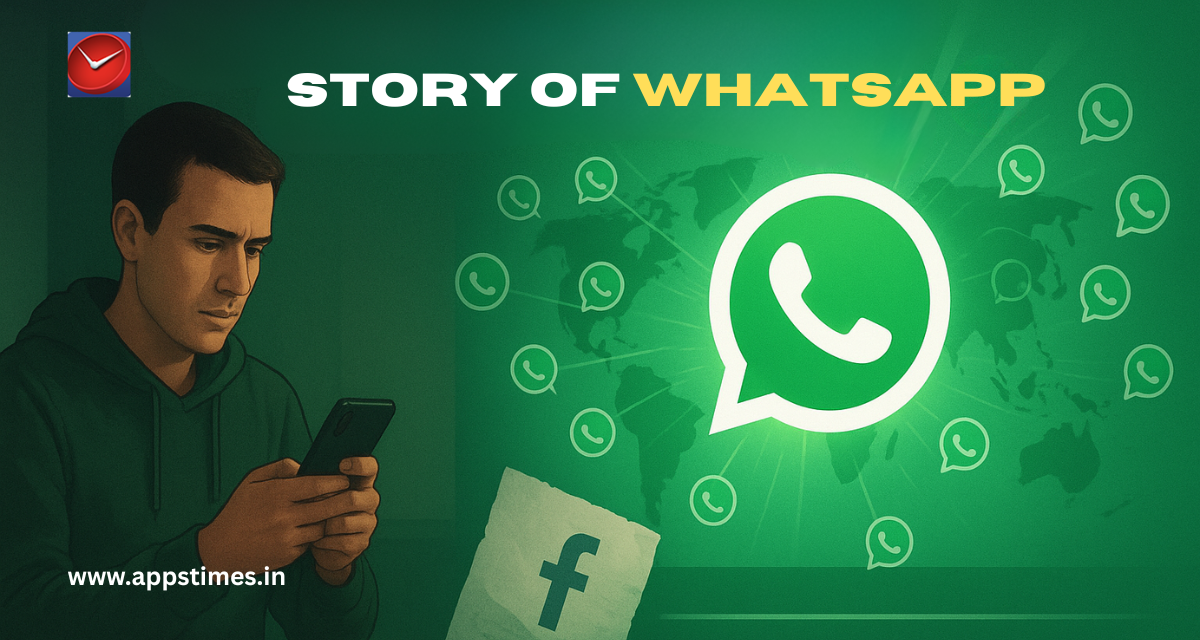
This is the story of two friends who turned Facebook’s rejection into the sweetest revenge in tech history, building the world’s most popular messaging app in the process
A Boy Who Escaped Communism
In 1976, in Kyiv, Ukraine, a boy named Jan Koum was born into a Jewish family during the height of the Soviet era. He grew up in a small village called Fastiv, where his father worked in construction while his mother stayed home
Young Jan experienced the negative effects of growing up in a Communist regime, where everything was eavesdropped on, recorded, and monitored. This childhood experience would later become the foundation of WhatsApp’s core principle: absolute privacy protection
In 1992, when Jan was just 16 years old, he moved with his mother and grandmother to Mountain View, California. A social support program helped the family secure a small two-bedroom apartment. His father intended to join them later, but tragically never left Ukraine and died in 1997
Life in America was hard. The family survived on food stamps and government assistance. But Jan had discovered something magical: computers
Self-Taught Genius and the Yahoo Years
Jan couldn’t afford computer books, so he developed a creative solution. He would buy manuals from used bookstores, study them intensely, and return them when finished. By 18, Jan was teaching himself computer networking and programming. He joined the famous hackers network called w00w00, where future tech luminaries like Napster co-founder Shawn Fanning also hung out
In 1997, Koum met Brian Acton while working at Ernst & Young. Later that year, Yahoo! hired him as an infrastructure engineer. Brian Acton had a different background—he grew up in Michigan, received a scholarship to study engineering at the University of Pennsylvania, but left after one year to attend Stanford
Two years after Acton joined Yahoo, Jan Koum was hired as an infrastructure engineer. Over the next nine years, the two worked together at Yahoo, bonding over late-night debugging sessions and games of ultimate frisbee. Acton lost millions in the dot-com bubble of 2000, a painful lesson that would later inform their conservative approach to growing WhatsApp
The Big Rejection That Changed Everything
In September 2007, Koum and Acton left Yahoo! and took a year off, traveling around South America. They both applied to work at Facebook but were rejected
Two talented engineers with nearly a decade of experience at one of the internet’s biggest companies—rejected by a startup run by a 23-year-old. This rejection could have been devastating, but it became the catalyst for something extraordinary
The Birth of WhatsApp
In January 2009, Koum bought an iPhone and realized that the then seven-month-old App Store was about to spawn a whole new industry of apps. He visited his friend Alex Fishman, and they talked for hours about an idea. Koum almost immediately chose the name WhatsApp because it sounded like “what’s up”—brilliant in its simplicity.
On February 24, 2009—his 33rd birthday—he incorporated WhatsApp Inc. in California
Koum launched the first version of WhatsApp on the Apple App Store in May 2009. It was unstable and at times completely unusable—he even considered giving up. At first, the app flopped. It was just a status updater where people could share what they were doing. Nobody cared
But his longtime friend Brian Acton urged him to stick with it. “You’d be an idiot to quit now,” Acton told him. “Give it a few more months.”
The Game-Changing Update
A month after launch, Apple updated the software for iPhones to allow push notifications. This move changed the entire game plan
Koum changed WhatsApp to “ping” users when they received a message, and soon afterward he and Fishman’s Russian-speaking friends in the area began to use WhatsApp as a messaging tool, in place of SMS
In September 2009, Koum released a new version with a messaging component. It was an instant hit with users, and within a few months, the user base increased from just a handful to 250,000
The Perfect Partnership
By fall 2009, Koum needed help, so he went back to Acton and persuaded him to join. Within one month, Acton had gotten five ex-Yahoo! colleagues to invest a total of $250,000 in seed money. Within two months, Acton became an official co-founder with a stake in the business
What made this partnership work? Koum and Acton shared a passion for hating advertisement, and Jan even had a note from Brian on his desk saying “No Ads! No Games! No Gimmicks!”
Their philosophy was refreshingly simple: charge 99 cents per year after the first free year. No ads. No games. No tracking. Just messaging
Strategic Growth and User Explosion
The business experienced rapid growth, which resulted in experimentation with various business models. “We’d grow super fast when we were free—10,000 downloads a day. And when we’d kick over to paid, we’d start declining, down to 1,000 a day.” This strategy helped the business grow at a rate it could handle
With Koum and Acton working for free for the first few years, their biggest early cost was sending verification texts to users. Today SMS verification runs the company about $500,000 a month
By early 2010, WhatsApp was generating roughly $5,000 monthly—just enough to cover costs. In December 2009, they updated WhatsApp for the iPhone to send photos, and were shocked to see user growth increasing even when it had the $1 price tag
By early 2011, WhatsApp was squarely in the top 20 of all apps in the United States
The $19 Billion Deal
In 2012, Koum’s inbox had a mail from Mark Zuckerberg, and its subject line read “Get together?” Mark expressed that he had been using WhatsApp and wanted to meet him for dinner
What followed was the most lucrative two-year courtship in the annals of technology
On February 9, 2014, Zuckerberg asked Koum to have dinner at his home, and formally proposed a deal to join the Facebook board. Ten days later, Facebook announced that it was acquiring WhatsApp for $19 billion
The irony was delicious. The same company that rejected both founders in 2009 now paid $19 billion to acquire their creation. Koum held about a 45% stake worth $6.8 billion, while Acton’s stake was over 20% worth $3 billion
Principles Over Profit
But the story doesn’t end with the sale. While both Koum and Acton stuck around in partnership with Facebook for a few years, they eventually left due to issues regarding advertising and users’ privacy protection—the two principles the business was founded upon
Acton cited he left $850 million on the table. After his departure, he even participated in the #DeleteFacebook movement. In April 2018, Koum announced that he was leaving WhatsApp and stepping down from Facebook’s board of directors due to disputes with Facebook
Both founders chose principles over billions. That’s rare in Silicon Valley
Life After WhatsApp and Giving Back
When Acton left WhatsApp in September 2017, he started the Signal Foundation, which is dedicated to helping people have access to private communication through an encrypted messaging app. In February 2018, he announced investing $50 million into Signal
In 2014, Acton and his wife Tegan started the foundation Wildcard Giving. In 2019, Forbes reported that Brian Acton and his wife had given more than $1 billion to charitable causes over their lifetimes
Jan Koum joined the Giving Pledge in 2014, committing to donate the majority of his wealth to philanthropic causes
WhatsApp Today: Global Communication Infrastructure
Today, WhatsApp has over 2 billion monthly active users, making it the most popular messaging platform in the world. It processes over 100 billion messages daily across 180+ countries
The app that started as a simple status updater has become essential infrastructure for global communication—connecting families across continents, enabling small businesses in developing countries, and serving as the primary communication tool for billion
The Lessons from This Journey
Rejection Fuels Innovation: Being rejected by Facebook lit a fire under Koum and Acton that led to building something even bigger
Friendship Matters: Koum may have never gotten WhatsApp out of beta had he not had someone he could go to for help—and Acton may have never said yes to Koum had they not had a pre-existing relationship
Principles Over Profit: Both founders walked away from billions rather than compromise on user privacy and their anti-advertising stance
Age Is Just a Number: Koum was 39 and Acton was 42 when they achieved their biggest success—considered old for Silicon Valley standards
Simplicity Wins: While competitors added features, WhatsApp focused on doing one thing perfectly: messaging.
Timing Matters: Recognizing the potential of mobile messaging at the right time was crucial. The iPhone’s push notification feature turned a failing app into a phenomenon.
Conservative Growth: Their strategy of alternating between free and paid helped them scale sustainably without venture capital pressure
Privacy Is Valuable: In an era of data harvesting, WhatsApp’s commitment to privacy became its greatest competitive advantage
The Legacy That Inspires
WhatsApp’s success story proves that you don’t need to be a 20-year-old Harvard dropout to build a billion-dollar company. You don’t need to move fast and break things. You don’t need to compromise your values for growth.
Jan Koum arrived in America at 16 with nothing, living on food stamps. Brian Acton lost millions in the dot-com crash. Both were rejected by Facebook. Yet they built something that connected the world—and did it without ads, without selling user data, and without sacrificing their principles.
Today, as you send a WhatsApp message to a friend, family member, or colleague, remember: you’re using an app built by two immigrants who refused to give up, who valued friendship over fame, and who chose principles over profit.
Their story reminds us that the most valuable things in tech aren’t always the flashiest—sometimes, they’re simply the ones that solve real problems for real people, built by people who genuinely care.
The message has been delivered. ✓✓