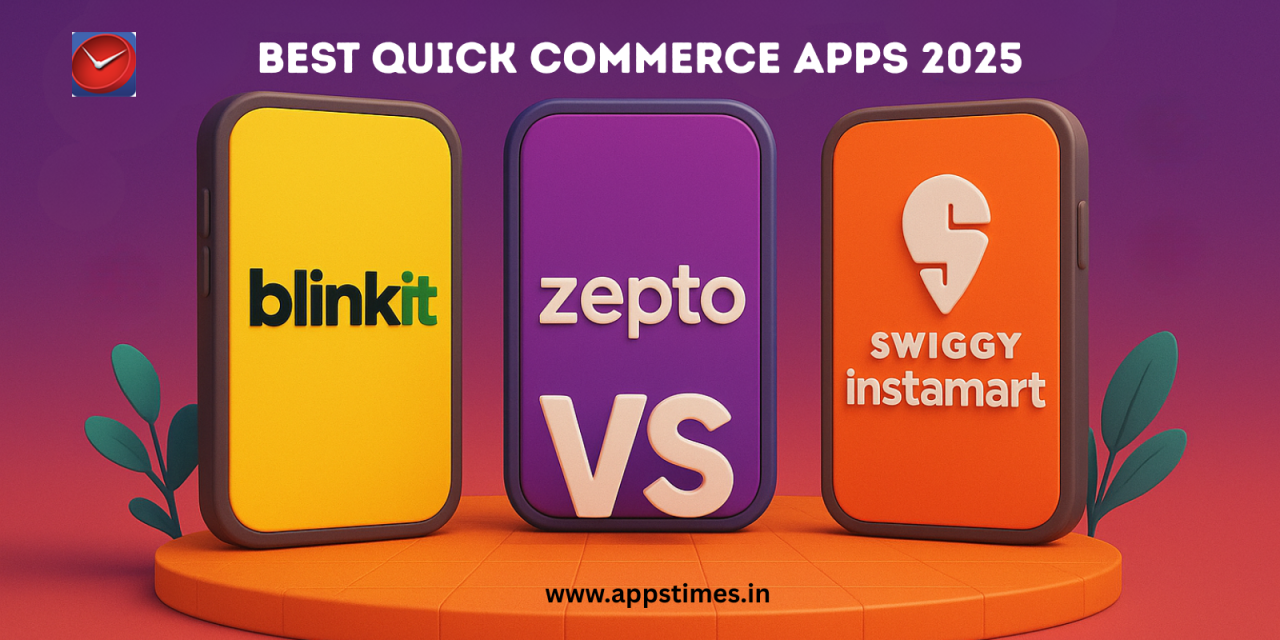
India’s retail landscape has undergone a dramatic transformation with the explosive rise of quick commerce apps delivering groceries, essentials, and even electronics in just 10-15 minutes. What began as a pandemic-driven convenience has evolved into a $3.34 billion industry projected to reach nearly $10 billion by 2029. With Blinkit, Zepto, and Swiggy Instamart dominating this ultra-fast delivery space, choosing the right platform can significantly impact your shopping experience, wallet, and time management
Why Quick Commerce Apps Are Revolutionizing Indian Retail
Quick commerce apps, often called Q-commerce, represent the next evolution beyond traditional e-commerce. While regular online shopping might take hours or days, quick commerce promises delivery within 10-30 minutes through strategically placed dark stores—micro-warehouses stocked with high-demand products positioned throughout cities
The sector’s explosive growth reflects changing consumer preferences. Urban millennials and Gen Z prioritize convenience, speed, and digital payment options over traditional shopping. The average order value continues rising as platforms expand into higher-value categories including electronics, cosmetics, and ready-to-eat meals
Consumer behavior analysis reveals that shoppers no longer demonstrate strong brand loyalty—they simply use whichever app offers the best deals and fastest delivery. This price sensitivity drives intense competition among platforms, benefiting consumers through continuous discounts and improving service quality
Top 3 Quick Commerce Apps 2025 Compared
1. Blinkit – The Market Leader
Formerly known as Grofers, Blinkit transformed from traditional online grocery to 10-minute delivery in 2021. Acquired by Zomato for approximately $570 million in 2022, Blinkit now commands 46-52% market share, making it India’s clear quick commerce leader
Best For: Widest city coverage, consistent delivery speed, extensive product range
Pricing: Competitive pricing with occasional surge fees during high demand
Market Position: Present in 30+ major cities with deep metro penetration
Key Features: Average 8-10 minute delivery in key cities, expanding non-grocery categories including electronics and cosmetics, contribution margin positive since 2024, seamless Zomato ecosystem integration
Standout Feature: Blinkit’s 8.8 million visits in Q1 2024 demonstrate massive user engagement and market dominance
Blinkit excels in grocery essentials while rapidly expanding into electronics, beauty products, toys, and even iPhone deliveries. The platform’s strategic dark store placement ensures consistently fast delivery even during peak hours. Recent innovations include buying directly from brands to bypass intermediary markups, improving margins while maintaining competitive pricing
The Zomato acquisition brought significant advantages including shared logistics infrastructure, cross-platform promotions, and combined customer data enabling better personalization. Blinkit contributed 33% of Zomato’s total sales in Q1 FY26, highlighting its importance to the parent company’s growth strategy
Download: Blinkit for iOS | Blinkit for Android
2. Zepto – The Purpose-Built Disruptor
Founded in 2021 by Stanford dropouts Aadit Palicha and Kaivalya Vohra, Zepto was designed from the ground up exclusively for ultra-fast delivery. With 29% market share and a $6 billion valuation, Zepto has become the fastest-growing quick commerce player, eyeing a public listing in 2025.
Best For: Metro city residents, fastest delivery times, minimalist app experience
Pricing: Competitive with Super Saver discounts activating at ₹499
Market Position: 10 major metros with 200+ micro-distribution centers focusing on density over spread
Key Features: Minimalist lightning-fast UI designed for seconds-to-order placement, predictive search and incredibly accurate real-time tracking, 10-minute delivery promise with high consistency, Zepto Cafe offering cooked meals and beverages, annualized sales run rate exceeding $1.5 billion
Standout Feature: Highest app ratings (4.7/5) reflect superior user experience and delivery accuracy
Zepto’s “density-first” strategy prioritizes dominating major metros rather than expanding nationwide. This focused approach enables exceptional service quality, with riders strategically positioned to minimize delivery times. The app’s interface is remarkably intuitive—users can complete orders faster than on competing platforms
Zepto Cafe represents an ambitious expansion into prepared food, competing directly with traditional food delivery apps by promising hot meals in under 10 minutes. The company has also launched private label products for groceries and meat to improve margins.
Download: Zepto for iOS | Zepto for Android
3. Swiggy Instamart – The Ecosystem Advantage
Swiggy’s quick commerce arm leverages the parent company’s massive food delivery network spanning 580+ cities. Launched in 2020, Instamart holds 25-27% market share and benefits from integration within India’s popular Swiggy app, providing instant access to millions of existing users.
Best For: Widest geographical reach, existing Swiggy users, all-in-one app convenience
Pricing: Competitive with Maxxsaver discounts at ₹399, occasional packaging fees ₹2-5
Market Position: Available across significant portion of Swiggy’s 580+ city network, unmatched Tier 2 and Tier 3 city presence
Key Features: Massive geographical coverage reaching smaller cities, integrated within main Swiggy app for seamless food-and-grocery ordering, 15-45 minute delivery window (slightly longer than competitors), eco-friendly e-bikes for last-mile delivery, Bolt service promising food in under 10 minutes
Standout Feature: Unparalleled reach makes Instamart the default choice for non-metro consumers
Instamart’s integration advantage cannot be overstated. Users already comfortable with Swiggy for food delivery naturally extend usage to grocery shopping, reducing customer acquisition costs significantly. The platform’s extensive reach makes it the only viable option for many Tier 2 and Tier 3 city residents
Swiggy’s recent IPO valued the company at $11.3 billion, with Instamart contributing 16% of total sales in Q1 FY26. The company targets profitability for Instamart by 2025, indicating operational efficiency improvements and sustainable growth focus
Download: Swiggy (includes Instamart) for iOS | Android
How to Choose the Right Quick Commerce App
Geographic Availability
Your location primarily determines which app works best. Swiggy Instamart offers unmatched coverage across 580+ cities, making it essential for Tier 2 and Tier 3 residents. Blinkit provides excellent service across 30+ major cities with multiple dark stores ensuring reliability. Zepto focuses on 10 major metros but dominates them completely
Delivery Speed Priority
If absolute speed matters most, Zepto and Blinkit consistently deliver within 10-12 minutes in their operational areas. Instamart’s 15-45 minute window remains faster than traditional e-commerce but slower than ultra-fast competitors
App Experience Preference
Zepto’s minimalist interface appeals to users wanting lightning-fast ordering. Blinkit offers clean, visually appealing design with excellent offer showcasing. Instamart’s integration within the main Swiggy app provides convenience despite feeling slightly cluttered
Product Range Requirements
All three platforms offer similar grocery essentials with minimal price differences—typically just a few rupees for identical items. Blinkit excels in non-grocery expansion including electronics and cosmetics. Zepto focuses primarily on groceries with high in-stock reliability. Instamart provides strong grocery selection plus complementary categories like pet supplies
Pricing Considerations
Direct price comparisons show negligible differences for staples—milk, bread, vegetables, and basic groceries cost nearly identically across platforms. Key pricing differences include surge fees (Blinkit applies these during high demand), discount thresholds (Zepto ₹499, Instamart ₹399 for maximum savings), and occasional packaging fees (Instamart charges ₹2-5 on some orders)
The Future of Quick Commerce in India
Morgan Stanley now estimates India’s quick commerce total addressable market at $57 billion, up 35% from previous $42 billion forecasts. This explosive growth attracts new entrants including Amazon Now, Flipkart Minutes, BigBasket Now, and urban service expansions
Amazon’s ultra-fast delivery pilot launched in early 2025, starting with Bangalore neighborhoods and expanding to categories beyond groceries. Flipkart intensifies efforts with 150 dark stores and high-value item additions. These e-commerce giants bring massive resources and established customer bases to the quick commerce battlefield
Expect continued innovation in ready-to-eat meals (Zepto Cafe, Swiggy Bolt), premium product categories, sustainability initiatives using electric vehicles, and AI-driven personalization. The sector’s maturation will likely bring consolidation, with smaller players either getting acquired or exiting
Profitability remains the critical challenge. Early-stage deep discounts and free deliveries burned significant cash, raising sustainability concerns. However, leading players now focus on unit economics, charging delivery fees during peak hours, optimizing operations, and expanding order sizes to improve margins. Blinkit achieved contribution margin positivity in 2024, signaling the model’s viability
Getting Started with Quick Commerce Apps
Download all three major apps and test them with small orders to evaluate delivery speed, product availability, and app experience in your specific location. Many users maintain multiple apps, choosing based on current promotions and delivery estimates
Enable notifications for exclusive deals and flash sales offering significant discounts. Follow apps on social media for promotional codes and limited-time offers. Consider premium memberships if available, which often provide free or discounted deliveries above certain order thresholds
Plan orders strategically to meet discount thresholds—₹399 for Instamart’s Maxxsaver or ₹499 for Zepto’s Super Saver. Combining purchases with family members or neighbors can help reach these amounts while splitting delivery costs
FAQ: Quick Commerce Apps India
Q: Which is the fastest delivery app in India 2025?
A: Zepto is known for completing deliveries in under 10 minutes across metro cities, followed closely by Blinkit with 8-10 minute average delivery times in key markets.
Q: How do 10-minute deliveries work?
A: Quick commerce uses “dark stores”—small warehouses strategically placed in neighborhoods. When you order, the nearest dark store fulfills it immediately, and a delivery partner on a bike delivers within minutes.
Q: Are quick commerce apps more expensive than traditional grocery shopping?
A: Item prices are comparable to local stores and often feature discounts. However, small delivery fees during peak hours or minimum order requirements may apply.
Q: Which app has the widest coverage in India?
A: Swiggy Instamart operates across 580+ cities, providing the most extensive coverage including Tier 2 and Tier 3 cities where Blinkit and Zepto may not operate.
Q: Is quick commerce sustainable and profitable?
A: The industry is transitioning from growth-at-any-cost to profitability focus. Blinkit achieved contribution margin positivity in 2024, and Swiggy targets Instamart profitability by 2025.
Conclusion
Quick commerce apps have fundamentally transformed Indian retail, making 10-minute grocery delivery a mainstream expectation rather than a luxury. Blinkit’s market leadership, Zepto’s rapid innovation, and Swiggy Instamart’s extensive reach each offer distinct advantages.
For metro residents prioritizing speed and app experience, Zepto delivers exceptional service. Blinkit provides the most balanced offering across coverage, speed, and product variety. Swiggy Instamart remains essential for Tier 2 and Tier 3 city residents lacking alternatives.
The competitive intensity benefits consumers through improving service, expanding product ranges, and maintaining affordable prices despite premium convenience. As the industry races toward the $10 billion milestone by 2029, expect continuous innovation making ultra-fast delivery even faster, cheaper, and more comprehensive.
Start exploring these platforms today and experience the convenience of doorstep delivery faster than brewing your morning chai. The future of retail is already here, arriving in just 10 minutes